
Insomnia: Cognitive Behavioral Therapy for Insomnia (CBT-I) may help
It’s 3am. You’re awake again. Instead of sleeping soundly, you groan inwardly. Rest feels so elusive. Breathing exercises. Visualizations. Didn’t I take melatonin earlier? Anxiety, dread, and despair set in. You think about checking emails for work. But your brain is so tired. Just as you almost fall asleep, a jolt of fear tightens your chest. The next day, you wake exhausted and hopeless that this cycle repeats, night after night.
You crave that sweet spot where you wake happy. You want control over your sleep, so that you don’t have to revolve your work and relationships around bizarre hours. You want peace and a natural rhythm to your body, mind, and emotional energy throughout the day.
Cognitive Behavioral Therapy for Insomnia (CBT-I) is considered the gold standard and first-line treatment for chronic insomnia. Endorsed by the American College of Physicians (the largest medical specialty organization), American Academy of Sleep Medicine, American Psychological Association Division 12 (Society for Clinical Psychology), and numerous international sleep and behavioral medicine organizations, CBT-I is a 5-8 week psychotherapy treatment program.
Wait, what about medication, like melatonin, trazadone, or benadryl?
Every year, the American Academy of Sleep Medicine (AASM) conducts an independent review of major sleep medications available the market. Anonymous sleep clinicians, who report no pharmaceutical conflicts of interests, analyze peer-reviewed journal articles and clinical trials on outcomes for patients who use prescribed and over-the-counter medications as sleep aid. Year-over-year, all medications reviewed report “weak” recommendations. The American College of Physicians is the largest organization for medical doctors in the nation, and they recommend that medications for insomnia are only used for 4-5 weeks for short-term sleep issues.
Instead, clinicians across organizations agree that CBT-I is a non-invasive and effective first-line treatment for chronic insomnia, garnering “strong” recommendation from the AASM.
What is CBT-I?
CBT-I is a 5-8 session program that addresses underlying causes of chronic insomnia. CBT-I was originally developed through research with over 10,000 patients through a collaboration at Harvard Medical School and the University of Massachusetts. In their study, over 90% of participants showed significant improvements in sleep over the course of five sessions.
Since their first study in 1996, researchers and clinicians across longitudinal studies have shown the efficacy of CBT-I, for patients who adhere to program recommendations[1].
Why haven’t I ever heard about CBT-I for insomnia?
Most people seek medication or over-the-counter sleep aids for insomnia. However, CBT-I is considered the first-line treatment for chronic insomnia.
I have already tried EVERYTHING. Isn’t this just more sleep hygiene basics?
No. CBT-I is not simply sleep hygiene. The 5-session program addresses insomnia in multiple ways. But clients must take action and adhere to the program.
What are the risks?
Unlike medication, CBT-I has no side-effects as a form of psychotherapy.
I already have a therapist. Do I need to leave my current therapist to do CBT-I?
No, CBT-I is designed as an adjunct program, similar to EMDR or other briefer therapies. You do not have to leave your individual therapist. However, your CBT-I therapist may redirect you to speak with your individual therapist if other issues get in the way of the sleep program. Likewise, a physician may be recommended to screen for underlying health issues that impact sleep, such as sleep apnea, restless leg syndrome, or hormonal imbalances.
What can I do next?
A therapist trained and certified in CBT-I may help guide you through sleep challenges and give you tools to continue to maintain better sleep. There are only less than 1,000 certified CBT-I therapists in the United States who are qualified to deliver CBT-I. You may find someone you like through directories such as the University of Pennsylvania Perelman School of Medicine. Nat Newton, AMFT, PhD, RPS is an in-house clinician at Silver Lake Psychotherapy who is available to assist you today.
Contact therapy@silverlakepsych.com for more information.

Written by Nat Newton AMFT, PhD, RPS
Associate Marriage & Family Therapist
[1] Jacobs, G. D., Benson, H., & Friedman, R. (1996). Perceived benefits in a behavioral-medicine insomnia program: A clinical report. The American Journal of Medicine, 100(2), 212–216.
Why sleeptrackers could lead to the rise of insomnia – and orthosomnia
In our chronically sleep-deprived society, many are using gadgets and apps to measure the quantity and quality of their shut-eye. But they could be causing more harm than good

Why sleeptrackers could lead to the rise of insomnia – and orthosomnia
By Emine Saner for The Guardian
In our chronically sleep-deprived society, many are using gadgets and apps to measure the quantity and quality of their shut-eye. But they could be causing more harm than good
For more than nine months, Alex Whitecross’s routine on waking was to check the data about his sleep on his fitness tracker. And then he would feel quite anxious. “I started getting paranoid about how much sleep I was getting,” he says. Whitecross, a computer-aided-design technician from south Wales, says he bought his tracker in order to measure exercise, but became interested in the sleep-monitoring function. “I’m a lighter sleeper than my fiance so I thought it would help me, but it ended up having the opposite effect.”
Sometimes he would check it in the night and feel panicked about how many hours he had until his alarm would go off. In the morning, “I would wake up and look at it, and it would say I’d had five hours and 44 minutes sleep, and spent an hour and 25 minutes awake at night. It made me feel more tired, knowing how little sleep I’d got.”
Read the full article here to learn about how sleep trackers might be doing more harm than good…
Sleep trackers can be helpful in making an effort to get a good night’s sleep, says Hare. “They can be part of a move towards appreciating how important it is to get sleep. It’s only a problem if people read more into the data than the data can give them.”

Do you really need 8 hours of sleep every night?
When you can't sleep, you're desperate for help. And there's a booming industry waiting to tell you all the ways a lack of sleep can ruin your health -- and to sell you fancy gadgets to help you finally doze off.

When you can't sleep, you're desperate for help. And there's a booming industry waiting to tell you all the ways a lack of sleep can ruin your health -- and to sell you fancy gadgets to help you finally doze off. Shedding light on this flawed doomsday messaging, Dr. Jen Gunter explains why you shouldn't lose sleep over sleep -- and what to do instead.
Learn more from Dr. Jen Gunter here.

How to Help a Teen Who Can’t Sleep
Nearly a quarter of adolescents grapple with insomnia. Experts say small habit changes can make a big difference.

Jun Cen
How to Help a Teen Who Can’t Sleep
By Catherine Pearson for The New York Times
Nearly a quarter of adolescents grapple with insomnia. Experts say small habit changes can make a big difference.
With packed schedules, school days that kick off at 8 a.m. and the lure of screens, it’s little wonder that many adolescents in the United States don’t get enough sleep.
National estimates suggest about six in 10 middle schoolers get less than the recommended nine to 12 hours of sleep a night, while about seven in 10 high schoolers clock less than the recommended eight to 10 hours. And more than one in five adolescents grapple with insomnia, characterized by problems falling asleep, staying asleep or getting sufficient quality sleep (or some combination thereof).
“There are two basic things that happen” when teens hit puberty, said Dr. Judith Owens, the director of the Center for Pediatric Sleep Disorders at Boston Children’s Hospital. “The first is that there’s a shift in their natural circadian rhythms, so their natural fall asleep time and wake time shift later — by up to a couple of hours. The second thing that happens is their sleep drive slows.” So not only do adolescents want to stay up later, but their bodies are actually capable of doing so, she explained.
Despite these biological shifts, experts stress that sleep loss is not a normal or natural part of adolescence..
Here are some tips:
Change one poor sleep habit.
Consider a harm reduction approach to screens.
Encourage “strategic napping,” but be wary of the weekend catch-up.
Help your teen ruminate less.
For details on each tip, read the full article here.

I’m a Couples Therapist. Something New Is Happening in Relationships.
I’ve come to see that one of the most pernicious issues couples struggle with is working through wrongdoing and blame.

Dina Litovsky for The New York Times
I’m a Couples Therapist. Something New Is Happening in Relationships.
By Orna Guralnik for The New York Times Magazine
One of the most difficult challenges for couples is getting them to see beyond their own entrenched perspectives, to acknowledge a partner’s radical otherness and appreciate difference and sovereignty. People talk a good game about their efforts, but it’s quite a difficult psychological task. To be truly open to your partner’s experience, you must relinquish your conviction in the righteousness of your own position; this requires humility and the courage to tolerate uncertainty. Coming to see the working of implicit biases on us, grasping that our views are contingent on, let’s say, our gender, class background or skin color, is a humbling lesson. It pushes us beyond assuming sameness, opening up the possibility of seeing our partner’s point of view.
Recent events have reshaped the national conversation on power, privilege, gender norms, whiteness and systemic racism. Together these ideas have pushed us to think, talk, argue and become aware of the many implicit biases we all carry about our identities, unconscious assumptions that privilege some and inflict harm on others. These insights have also made it easier for people to realize there may be plenty of other unconscious assumptions undergirding their positions.
Psychoanalysis is about exploring unconscious motivations behind thoughts or actions. It allows people to gain access to how early experiences — vicissitudes of attachment and trauma — have shaped them, and to expand their capacity for thought and feeling. For couples, I incorporate systems thinking, a practice that focuses on the system — a couple, say or a family — and interprets how each individual unconsciously behaves in ways that serve the system as a whole.
Over the years, I’ve come to see that one of the most pernicious issues couples struggle with is working through wrongdoing and blame. The claim “You hurt me” often sends couples spiraling. People want to feel like good and lovable beings; their intentions make perfect sense to themselves, and they hate being interpreted as selfish. In psychoanalytic jargon we often say, “No one likes being the ‘bad object.’” In fact, there are few things people resist more than being held responsible for causing harm. It immediately threatens to overwhelm the “offender” with shame (Am I a bad person?) and guilt (Have I caused irreparable damage? Should I be punished?). Yet serious hurt that goes unacknowledged leads to the accumulation of resentment and a deadening of the relationship.
Read the full article here.

How to Be There When Mother’s Day Isn’t Easy
“The holiday itself was established to honor someone who’s mother died,” says Meghan Riordan Jarvis, a clinical psychotherapist with experience in the fields of trauma, grief, and loss. “But we’ve morphed it into taking our mothers to brunch.”

How to Be There When Mother’s Day Isn’t Easy
By SIMMONE SHAH for TIME
In the early 1900’s, Anna Jarvis created Mother’s Day as a way to memorialize her mother who had passed away and acknowledge the sacrifices made by mothers who had worked to improve the lives of others.
Whether it is the supermarket displays of flowers and cards or the deluge of promotional sales for gifts, what the holiday has become often leaves little space for loss. “The holiday itself was established to honor someone who’s mother died,” says Meghan Riordan Jarvis, a clinical psychotherapist with experience in the fields of trauma, grief, and loss. “But we’ve morphed it into taking our mothers to brunch.”
Part of this shift is because some find it difficult to know how to support someone who is struggling on Mother’s Day. Experts tell TIME that supporting someone through the day can be as simple as acknowledging their feelings surrounding the holiday.
Read the full article here.
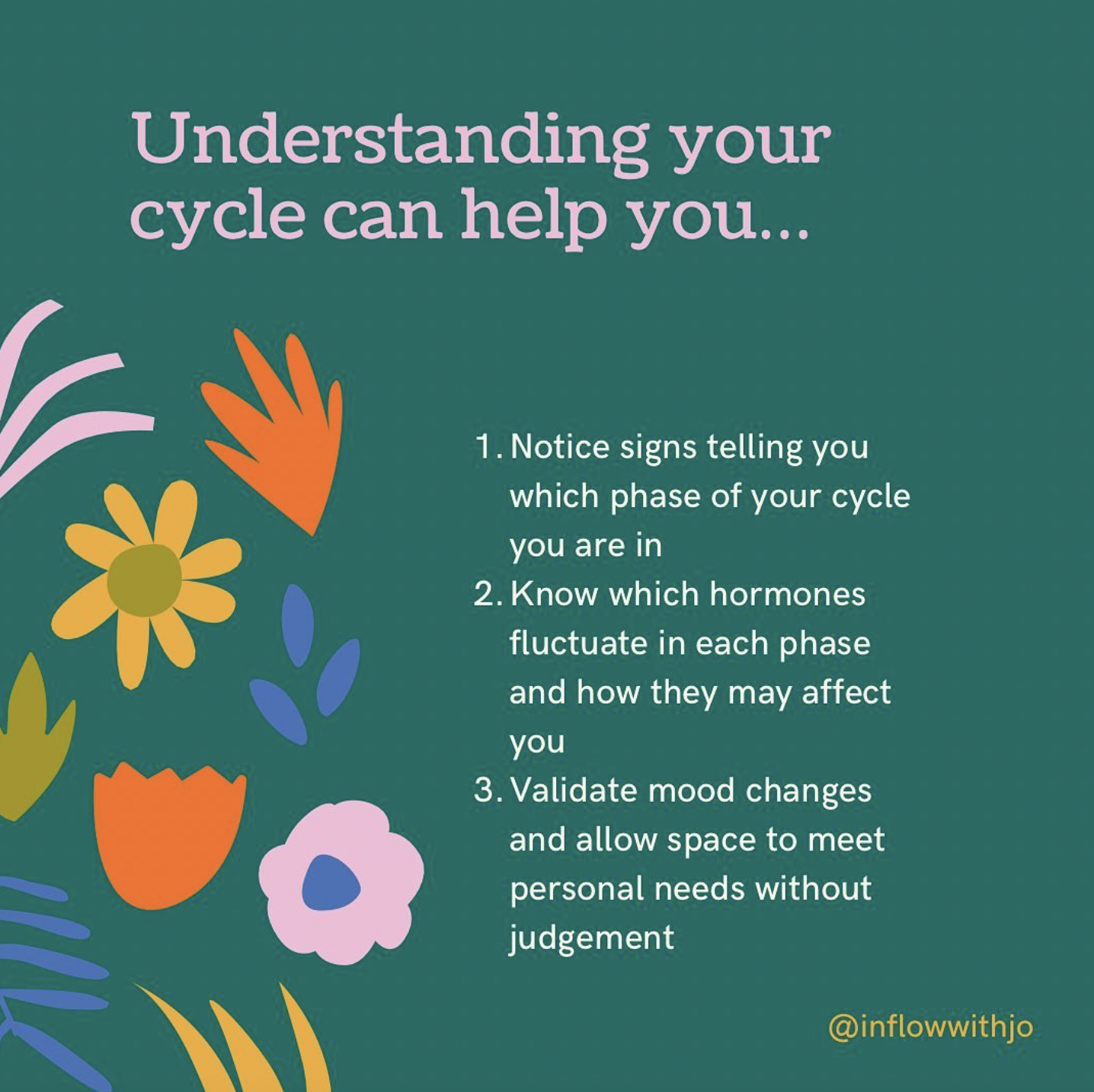
SLP Series: The Taboo of Menstruation
Most people, including those who menstruate, are taught about the menstrual cycle in middle school. This is at an age when learning about anatomy, reproduction, and sexual health is not necessarily welcomed with open arms. While sex and reproductive education at school address education of the menstrual cycle, it is often culture, media, religion, and familial norms that shape one’s emotional experience and relationship to menstruation.

Before diving into the topic of menstrual cycles, I would like to note a few disclaimers. I am writing this as a cisgender, white, Jewish woman. While my experience with this subject is academically and clinically informed, my point of view is inherently informed by my personal experience. I would also like to note that not all who menstruate are women and not all women menstruate. This is due to various factors and circumstances such as gender identity, medical health, hormonal birth control, pregnancy, breastfeeding, and menopause. As I write on this subject, it is meant for all individuals with a relationship to the menstrual cycle and for those supporting them. My goal in authoring this article is to de-stigmatize the subject and encourage conversations about menstruation in therapy.

What we’re taught.
Most people, including those who menstruate, are taught about the menstrual cycle in middle school. This is at an age when learning about anatomy, reproduction, and sexual health is not necessarily welcomed with open arms. While sex and reproductive education at school address education of the menstrual cycle, it is often culture, media, religion, and familial norms that shape one’s emotional experience and relationship to menstruation. As years go on, the topic is often seeped in discomfort where anatomical language is forgotten and euphemisms prevail. While educational experiences vary (they are not all bad!), menstrual shame and stigma are often internalized. Take a moment and reflect on how you felt seeing the headline of this article. Relief? Disgust? Intrigue? The therapy room is not devoid of these stigmas. A lack of education and cultural acceptance of the full life cycle of menstruation has left many of us with a blind spot when addressing how this experience over a lifetime impacts mental health and wellbeing.
Vital but invalidated.
The American College of Obstetricians and Gynecologists and the American Academy of Pediatrics considers menstruation the 5th vital sign for adolescents. While this is accepted as a measure for developmental and adolescent health, the importance of a cycle should be posited for all menstruators during the following years of their life. Being deemed as the “fifth vital sign” means in addition to measures like blood pressure and heart rate, menstruation is an indicator of one’s overall health. The persistent cultural discomfort around the topic begs the question, why aren’t we speaking in depth about this important measure of health beyond adolescence? How do we diminish shame and make room for questions like: Why do people hide tampons up their sleeve on the way to the bathroom as if not to be found out for this natural occurrence? What is it like to have a period when exploring one's gender identity? Why are people only learning about the intricacies of a cycle when they are trying to conceive? How do hormones impact mental health? Why do people have to go through menopause with societal pressure to maintain a sense of normalcy to friends, family, partners, and colleagues? Instead of brushing past the inherent challenges of having a cycle, what if we looked more closely at them?
Bringing it to therapy.
While psychotherapy is not the appropriate setting to seek medical help or advice for menstrual health, it can be extremely supportive in the process of understanding one’s relationship to their cycle. By removing societal taboos and allowing space to discuss menstruation in therapy there is more opportunity to heal emotional wounds, embrace one’s identity, and strengthen one’s relationship with themselves. A few examples below of how menstruation can play a useful role in the therapy room.

Self Exploration and Healing
Discussions of menstruation can be useful when exploring one’s relationship to gender, one’s connection to their physical body as well as one’s sexuality.
Exploration of one’s experience with menstruation can include reflection on systemic issues, culture, religion, familial norms.
Fertility, Menopause, and Medical Diagnoses
Across the lifespan of menstruation, from menarche (one’s first period) to menopause (when one no longer gets a period), people go through many phases of life alongside their menstrual cycle.
One’s relationship to premenstrual symptoms, fertility, aging, and going through perimenopause (the years leading up to menopause) can arise as emotionally difficult experiences that can result in frustration, loneliness, depression, and feeling great dis-ease with one’s body.
Some reproductive medical issues can take years to reach clarity around and gain resolve. For example, endometriosis takes on average 8 years to receive a diagnosis for. That means an individual is likely living through years of chronic pain and advocating for themselves in doctors offices on their journey to finding treatment.
Menstruation and Mental Health Symptoms
While Premenstrual Symptoms (PMS) are widely known and openly discussed, people can also experience fluctuations in mental health symptoms in correlation to their cycle.
Fluctuations are important to discuss and further examine. Tracking cyclical fluctuations over time is helpful to identify patterns and anticipate cyclical changes in emotions, mood, and overall functioning.
Symptoms can be a sign of a formal disorder such as Premenstrual Dysphoric Disorder, or may be a sign of Premenstrual Exacerbation, when already existing symptoms of a clinical diagnosis increase in the two weeks prior to menstruation.
Additionally, menstrual health is clinically discussed as a symptom of eating disorders (one may not menstruate while struggling with disordered eating), and one’s return to a regular cycle is a physical sign of improvement when recovering from an eating disorder.
By opening up the topic of menstruation in therapy clients have the opportunity to deepen connection to a part of themselves that is generally overlooked. As topics like menopause are starting to get more attention in the media, we are reminded how much is lost by staying silent about one’s experience and how freeing it can be to speak the unspoken.
For more information on some of the topics mentioned above, please see some organizations and publications below.
International Association for Premenstrual Disorders
Period Trauma and Black Menstruators
Relationship to Menstruation and ADHD
Eating Disorders - Signs and Symptoms
New York Times, Women Have Been Misled About Menopause
Joanna Greenbaum is an Associate Psychotherapist at Silver Lake Psychotherapy. She has a Masters of Arts degree from Antioch University and is a Certified Menstrual Health Coach. Joanna works with all genders in individual and couples therapy and specializes in the intersection of menstruation, hormones, and mental health.
Joanna Greenbaum, AMFT 129009
Supervised by Dr. Justin Shubert PSY 23766

Women Have Been Mislead About Menopause
Imagine that there was a treatment for all these symptoms that doctors often overlooked. The scenario seems unlikely, and yet it’s a depressingly accurate picture of menopausal care for women. There is a treatment, hardly obscure, known as menopausal hormone therapy.

Marta Blue for The New York Times
Women Have Been Mislead About Menopause
By Susan Dominus for The New York Times
Hot flashes, sleeplessness, pain during sex: For some of menopause’s worst symptoms, there’s an established treatment. Why aren’t more women offered it?
For the past two or three years, many of my friends, women mostly in their early 50s, have found themselves in an unexpected state of suffering. The cause of their suffering was something they had in common, but that did not make it easier for them to figure out what to do about it, even though they knew it was coming: It was menopause.
The symptoms they experienced were varied and intrusive. Some lost hours of sleep every night, disruptions that chipped away at their mood, their energy, the vast resources of good will that it takes to parent and to partner. One friend endured weeklong stretches of menstrual bleeding so heavy that she had to miss work. Another friend was plagued by as many as 10 hot flashes a day; a third was so troubled by her flights of anger, their intensity new to her, that she sat her 12-year-old son down to explain that she was not feeling right — that there was this thing called menopause and that she was going through it. Another felt a pervasive dryness in her skin, her nails, her throat, even her eyes — as if she were slowly calcifying.
Now imagine that there was a treatment for all these symptoms that doctors often overlooked. The scenario seems unlikely, and yet it’s a depressingly accurate picture of menopausal care for women. There is a treatment, hardly obscure, known as menopausal hormone therapy, that eases hot flashes and sleep disruption and possibly depression and aching joints. It decreases the risk of diabetes and protects against osteoporosis. It also helps prevent and treat menopausal genitourinary syndrome, a collection of symptoms, including urinary-tract infections and pain during sex, that affects nearly half of postmenopausal women.
Read the full article here.

Lean Into Negative Emotions. It’s the Healthy Thing to Do.
When we perceive our emotions as bad, we pile more bad feelings onto our existing ones..

Jérôme Berthier
Lean Into Negative Emotions. It’s the Healthy Thing to Do.
By Melinda Wenner Moyer for The New York Times
Recent research suggests that while bad feelings can affect your well-being, your perspective on those feelings can play an even bigger role in your mental health.
In a study published last month in the journal Emotion, researchers found that people who habitually judge negative feelings — such as sadness, fear and anger — as bad or inappropriate have more anxiety and depression symptoms and feel less satisfied with their lives than people who generally perceive their negative emotions in a positive or neutral light.
The findings add to a growing body of research that indicates people fare better when they accept their unpleasant emotions as appropriate and healthy, rather than try to fight or suppress them.
Learn why judging your feelings can backfire by reading the full article here.
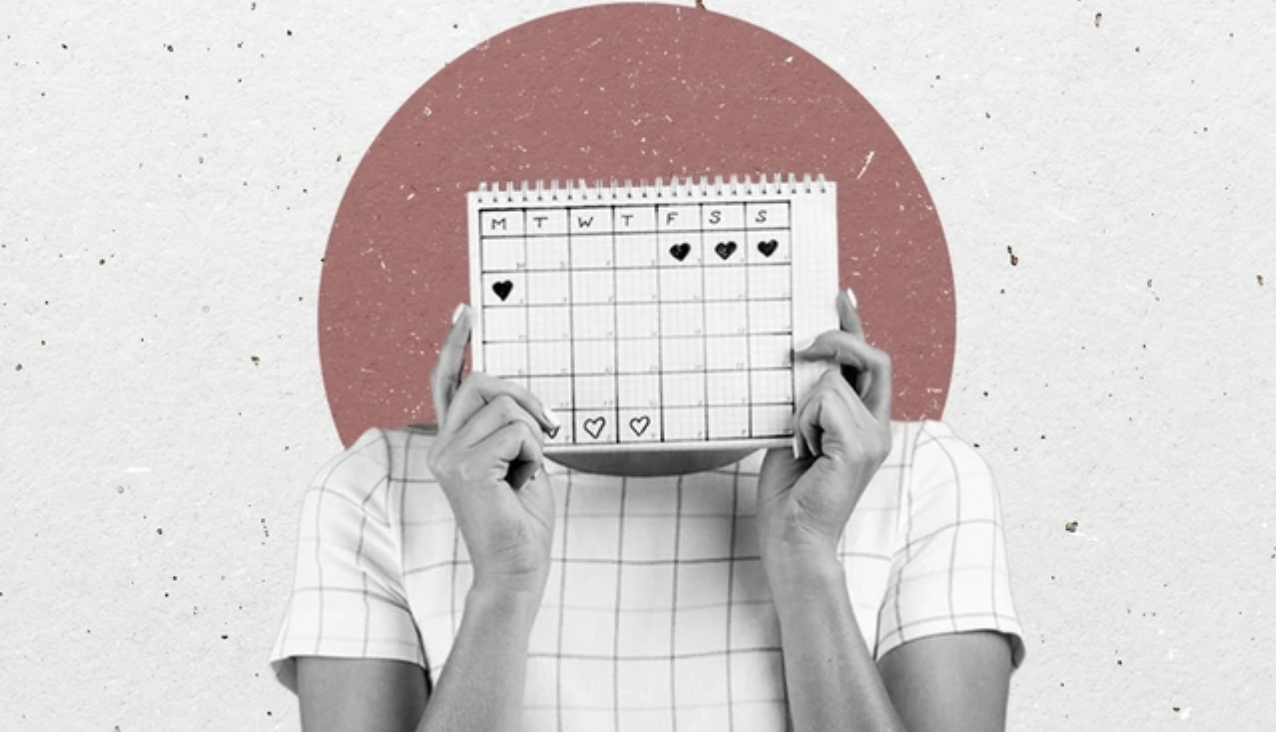
Why Does Your Mood Change Before Your Period?
Here’s a deep dive into why your mood changes before your period begins.

Why Does Your Mood Change Before Your Period? by Taneia Surles, MPH for healthnews
Menstrual mood disorders can cause significant changes in your emotions before the onset of your period. You may experience irritability, episodes of depression, and other mood changes you typically wouldn’t have outside your period. If you have mood changes before your period, you’re not alone.
Many people who go through the menstrual cycle can endure temporary emotional changes because of conditions like premenstrual syndrome (PMS) and premenstrual dysphoric disorder (PMDD).
Here’s a deep dive into why your mood changes before your period begins.
Read the full article here.

The menstrual gap in mental health
We often talk about the physical symptoms of periods, but the psychological impact of menstruation often gets left out of the conversation.

The menstrual gap in mental health
We often talk about the physical symptoms of periods, but the psychological impact of menstruation often gets left out of the conversation.
By Elizabeth Whitehead for Harpers Bazaar
Although there’s been a movement to dismantle menstrual taboos, the emotional distress associated with periods still carries a stigma. Historically, menstruation has held deep-seated associations with ‘irrationality’ and ‘hysteria’, and to this day, PMS (Premenstrual Syndrome) is still somewhat of a punchline. When a man describes a woman as ‘PMSing’ the implication is often that he is the one who is suffering— not her. This attitude only serves to normalise emotional turmoil and diminish the important relationship between the menstrual cycle and mental health.
Read the full article here.

Did pandemic stress change women’s periods?
New research suggests that higher stress levels during the pandemic were associated with more changes to women’s menstrual cycles.

Did pandemic stress change women’s periods?
By Amanda Morris for The Washington Post
New research suggests that higher stress levels during the pandemic were associated with more changes to women’s menstrual cycles
During the pandemic, many women experienced high levels of stress as they took on a disproportionate share of child care and housework and dropped out of the labor force in large numbers.
Now, a new study suggests that all of this extra stress may have changed women’s menstrual cycles in a variety of ways. Some women who reported high levels of stress also reported early or delayed periods. Others had heavier menstrual flow or increased spotting between cycles. Some women said that during pandemic stress, their periods lasted more days than usual, while others said their periods got shorter.
Read the full article here.
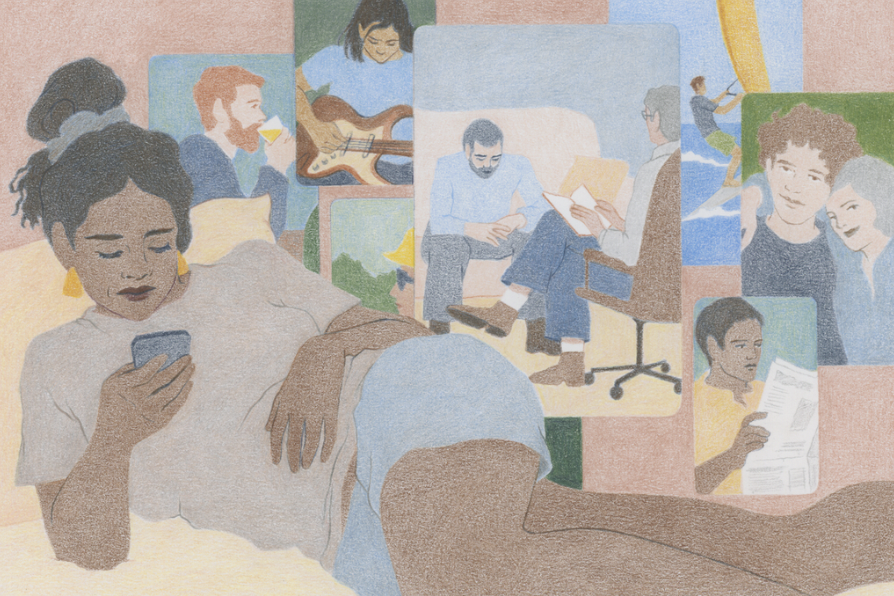
Seeking Relationship, Therapy Required
For some singles, a potential partner who isn’t working on their mental health is not an option.

Camille Deschiens
Seeking Relationship, Therapy Required
By Alyson Krueger for the New York Times
For some singles, a potential partner who isn’t working on their mental health is not an option.
Gen-Z and younger millennials are much more likely to seek mental health help than older generations, according to a 2018 survey by the American Psychological Association. The pandemic also brought mental health even more into the mainstream, making it something people make into priority and talk about openly.
Some of this is now trickling into dating. Many singles, rather than looking for someone of a certain height or a particular profession, are now saying they want someone who works on their mental health.
Read the full article here.
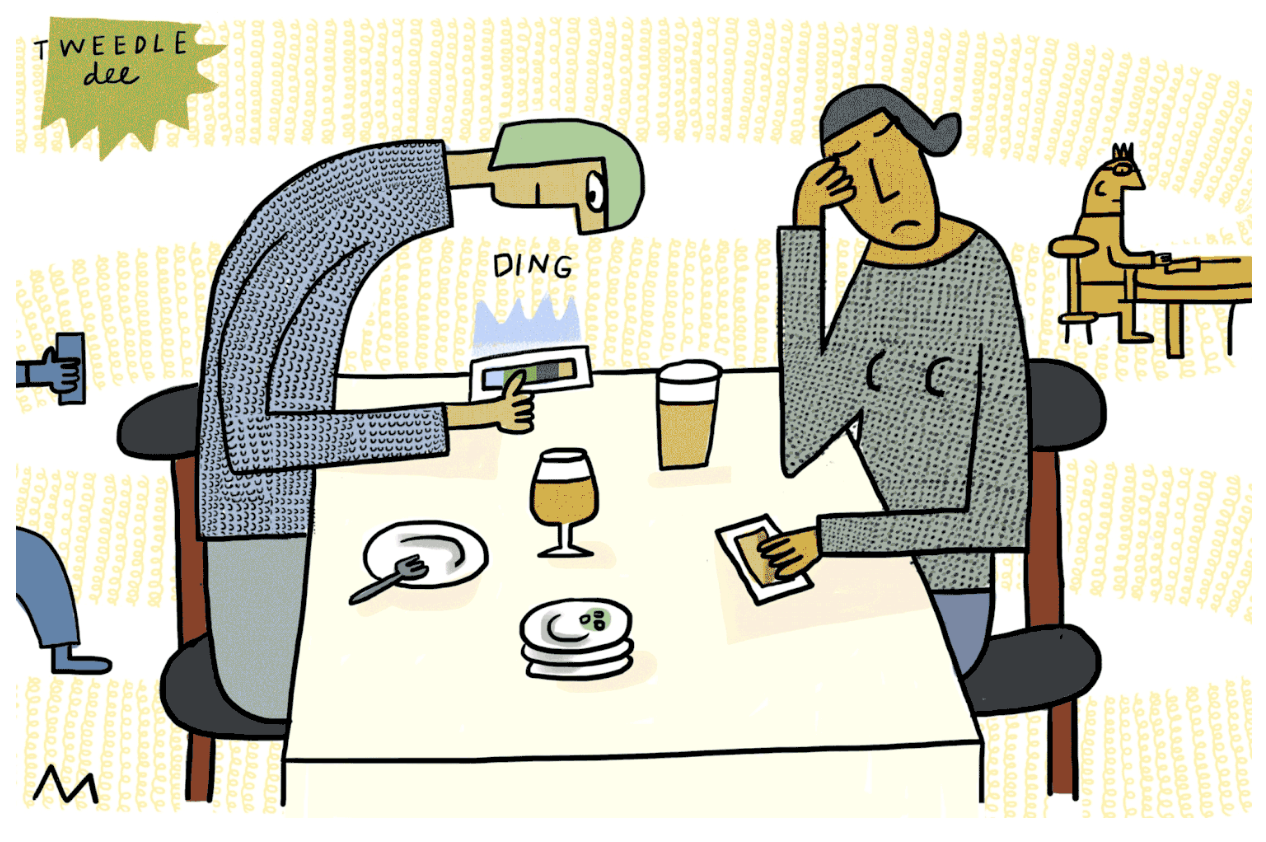
The Phones We Love Too Much
Phone love can go too far — so far that it can interfere with human love.
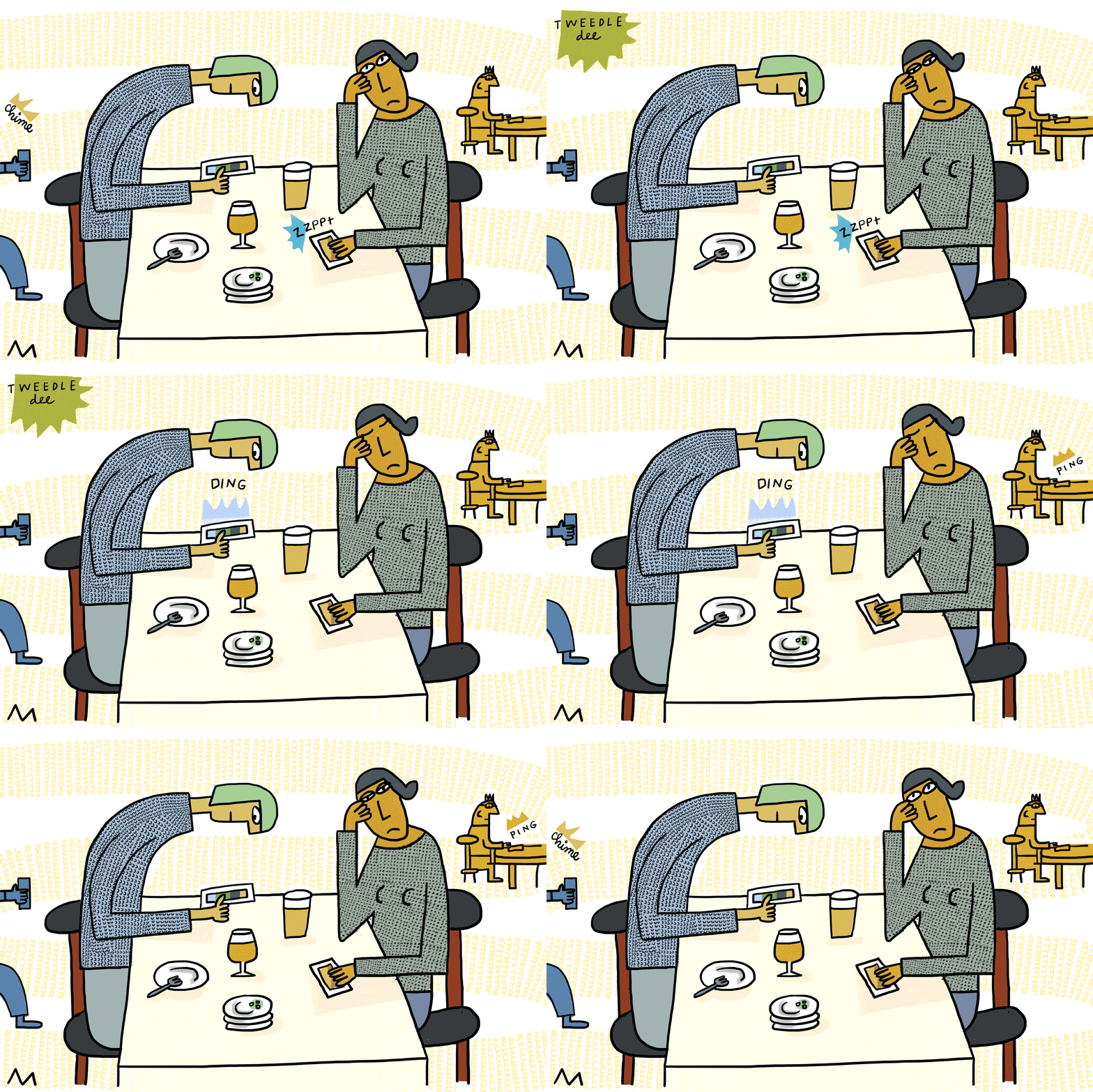
The Phones We Love Too Much
By Lesley Alderman
We have an intimate relationship with our phones. We sleep with them, eat with them and carry them in our pockets. We check them, on average, 47 times a day — 82 times if you’re between 18 and 24 years old, according to recent data.
And we love them for good reason: They tell the weather, the time of day and the steps we’ve taken. They find us dates (and sex), entertain us with music and connect us to friends and family. They answer our questions and quell feelings of loneliness and anxiety.
But phone love can go too far — so far that it can interfere with human love —
Read the full article here.

How to Set Boundaries With a Difficult Family Member
Here are her strategies for setting boundaries with a difficult family member

Jing Wei
How to Set Boundaries With a Difficult Family Member
By Catherine Pearson for The New York Times
Distancing yourself from a family member is not the same as ignoring that person, she writes. Distancing might mean putting time and space between you and your relative (for example, declining invitations or staying in a hotel during family holidays). Distancing could also mean engaging less with the person on an emotional level (for example, steering the conversation away from topics you’re not comfortable with or simply excluding that person from certain areas of your life).
If you want to maintain a relationship with a difficult family member because it ultimately feels worth it to you, acceptance — and strategic distancing — can give you some peace, Ms. Tawwab writes, but it won’t be easy.
“You will have to do the work to accept situations, and build patience for what is outside your control,” she writes. “Remember that dealing with certain problematic behaviors is a choice.”
Read the full article here.
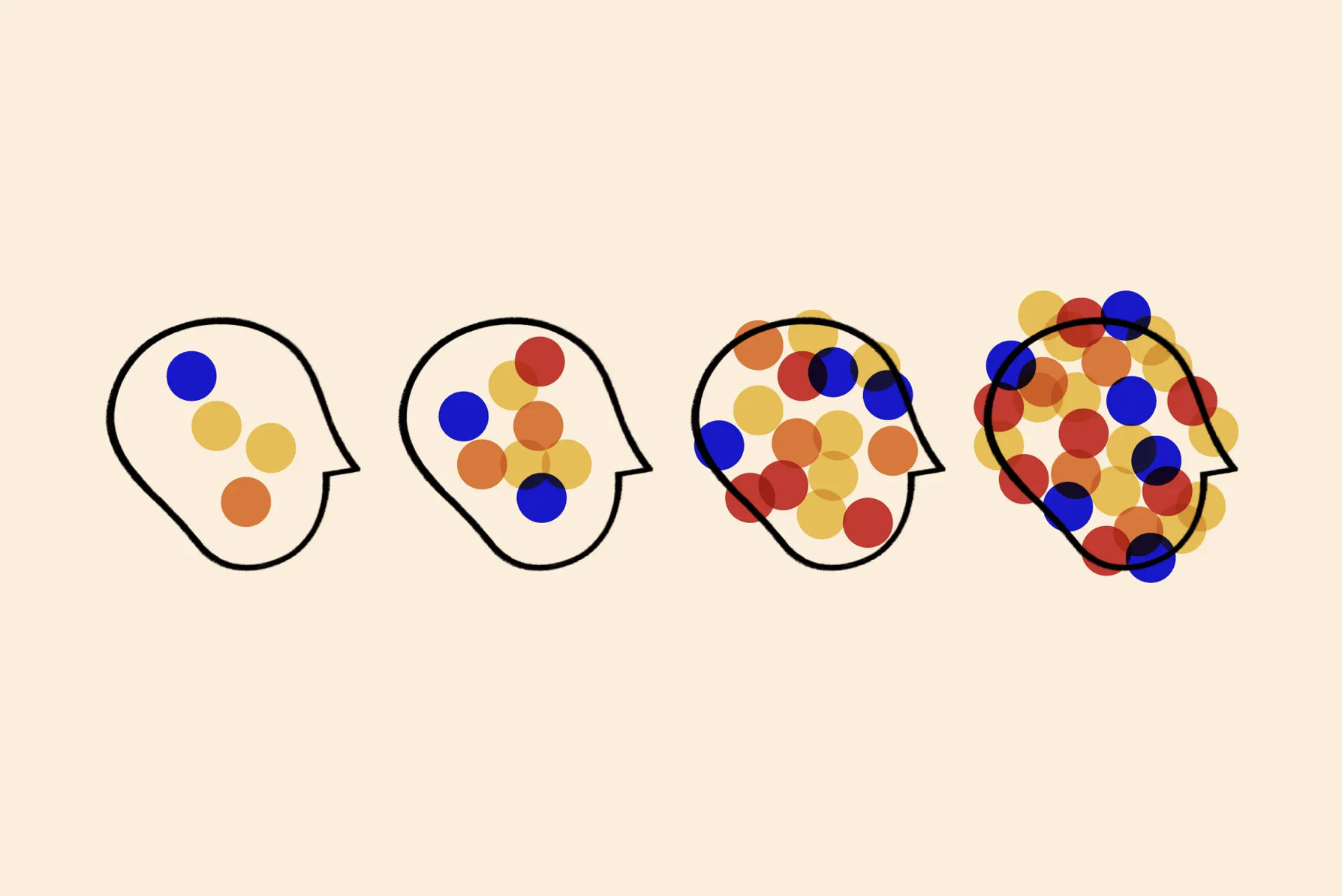
How to Tell the Difference Between Regular Distraction and A.D.H.D.
TikTok is leading many adults to question if they have A.D.H.D. If a video (or article) has you thinking you may have undiagnosed A.D.H.D., here’s what to consider.

How to Tell the Difference Between Regular Distraction and A.D.H.D.
By Dana G. Smith for The New York Times
Do you: Cut the tags out of your clothes? Relive (and regret) past conversations? Have episodes of burnout and fatigue? Zone out while someone is talking? Become hyper-focused while working on a project? Take on dozens of hobbies? Daydream? Forget things?
According to TikTok, you might have attention deficit hyperactivity disorder.
After viewing these videos, many people who were not diagnosed with A.D.H.D. as children may question whether they would qualify as adults.
The key to diagnosing the condition, however, requires “determining that it’s serious, it’s extreme” and it’s interfering with people’s lives, he said. It’s also critical that the symptoms have been present since childhood.
Those nuances can be lost on social media, experts say. In fact, one study published earlier this year found that more than half of the A.D.H.D. videos on TikTok were misleading. If a video (or article) has you thinking you may have undiagnosed A.D.H.D., here’s what to consider.
Read the full article here.
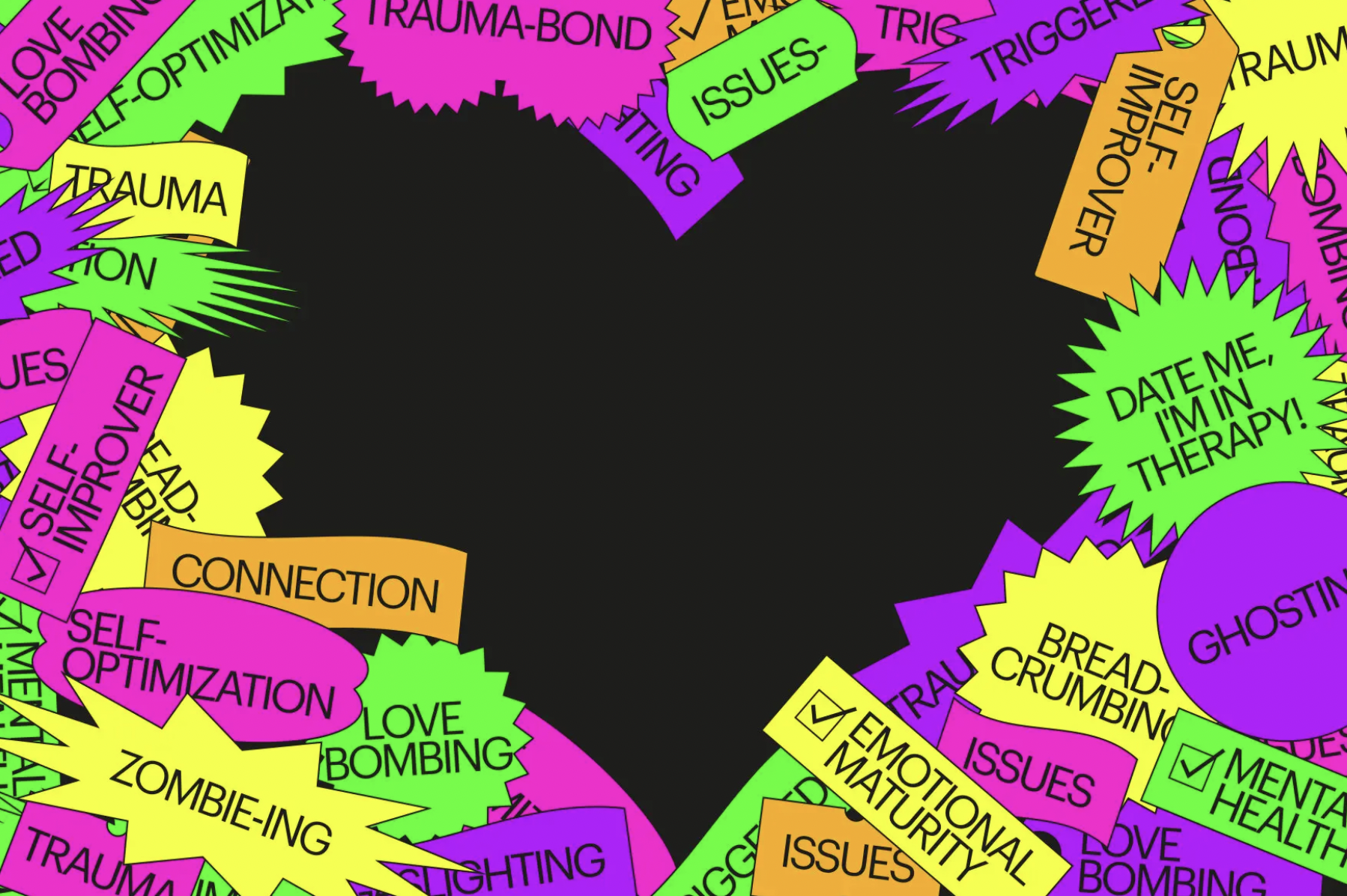
How Therapy-Speak Took Over Dating
A growing number of people now broadcast intimate, specific details, including proclamations about their mental health

Illustrations by Marta Cerdà Alimbau
How Therapy-Speak Took Over Dating
By Dani Blum for The New York Times
In a time when emotional maturity is highly desirable, almost everyone is “doing the work.”
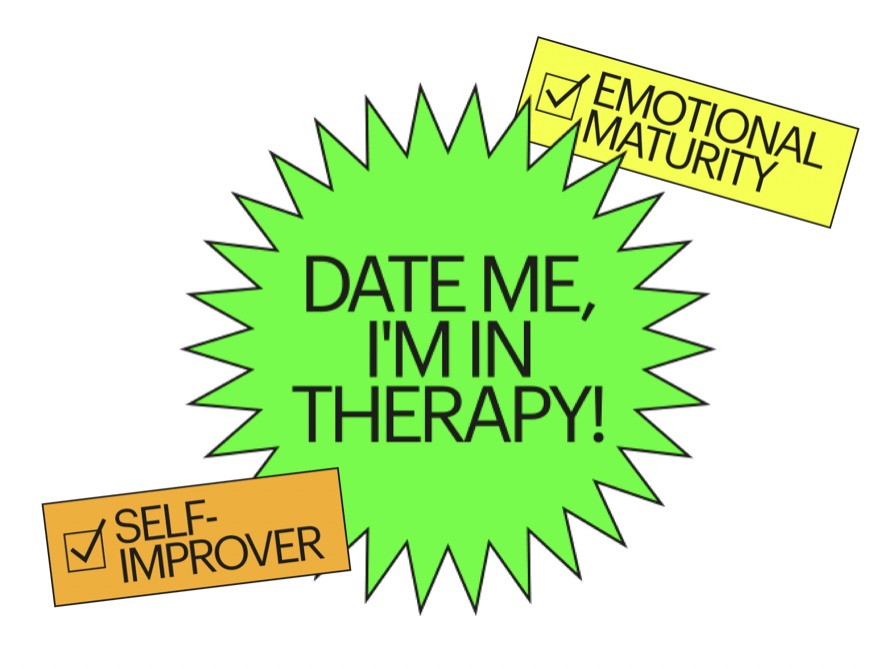
“In the ’50s, or even the ’80s, it would be hard to imagine that saying ‘I see my therapist regularly’ would have status,” said Eli Finkel, a psychology professor at Northwestern University and the author of “The All-or-Nothing Marriage.” But now, he said, taking care of one’s mental health carries social currency in some spheres.
A growing number of people now broadcast intimate, specific details, including proclamations about their mental health, Dr. Carbino said. It’s a technique used both to signal your values and to weed people out, she said — if therapy is essential to you, for example, you might not want to date someone who’s never been.
It suggests that you’ve done “the work.” In other words, you’re enlightened, the best version of yourself. “It’s part of this discourse of self-optimization,” Dr. Bandinelli said.
There are, however, clear downsides to learning a therapy term via TikTok video or meme, namely that nonprofessionals can get it wrong. The term “trauma bonded,” in particular, is tossed around to signify connecting with someone over shared struggles; the clinical definition of the term refers to a specific pattern of abuse.
This language can also provide a convenient excuse to write someone off. “I find a lot of the times, it gives people leverage,” said Edward Nyamenkum, a 29-year-old art director in Montreal. “It makes people feel OK when they ghost someone, like, ‘They’re obviously toxic,’ without giving them a chance.”
And when people misuse these words, deploying a weighty term like “gaslighting” to describe more banal, everyday turmoils that come with dating, those who actually experience abuse have less of a voice, Dr. Bandinelli said. This “explosion of diagnostic language,” as she called it, provides blanket, simple language for what are often complex and specific conundrums that come with modern dating.
“There’s this sense that using jargon that’s pseudoscientific somehow makes our argument stronger,” Dr. Bandinelli said. If someone acts like a jerk, she said, that may be just be one person’s opinion. “But if you’re ‘gaslighting me’ or ‘love bombing me,’ that makes it objective,” she said.
Read the full article here.
How My Wife and I Took Back Our Sundays
One day a week, we do absolutely nothing.

How My Wife and I Took Back Our Sundays
We have an agreement: One day a week, we do absolutely nothing. In a society obsessed with productivity, this is harder than it should be—but it’s worth it.
By Jason Heller for ‘The Atlantic’
A few years ago, my wife, Angie, and I made a pact: Every Sunday, we swore to each other, we will abstain from work. And we kept our promise:
Take back your Sunday and read the full article here.

My Boyfriend Loves Me, but He’s Not Affectionate Enough
Most people come in making a case for why the other person needs to improve. Spoiler: That never helps.

Bianca Bagnarelli
‘Dear Therapist: My Boyfriend Loves Me, but He’s Not Affectionate Enough’ by Lori Gottlieb for The Atlantic
I’m tired of feeling like I’m putting more effort into our relationship than he is.
One thing I tell many couples when they first come in for therapy is that the more one person believes that his or her partner should be different, the less initiative he or she will take to change things. Most people come in making a case for why the other person needs to improve. Spoiler: That never helps.
Read the full article here
Sex? After Kids? Tell Me More, Esther Perel
Dr. Becky consults with the renowned couples therapist, Esther Perel, to talk about what parents can do to rekindle their desires.

Sex? After Kids? Tell Me More, Esther Perel
This week Dr. Becky consults with the renowned couples therapist, Esther Perel, to talk about what parents can do to rekindle their desires.
What happens when two become three, or four, or five? Who is responsible for the needs and wants of a couple when days are filled with playdates, pick-ups, and meal preps? Nights lack the erotic energy that couples need not only to survive but to thrive. This week, Dr. Becky consults with the renowned couples therapist, Esther Perel, to talk about what parents can do to rekindle their desires.
Listen to the full episode here.