
This short animated film taken from a recent Esther Perel interview is a gem for anyone navigating relationships and intimacy. We hope you enjoy.
Martha Beck: The Way of Integrity

Martha Beck: The Way of Integrity
In this Super Soul podcast episode, Oprah talks to Harvard-trained sociologist, world-renowned coach and New York Times bestselling author Martha Beck about her latest book "The Way of Integrity: Finding the Path To Your True Self."
They discuss how living in alignment with our inner truth is the key to a purposeful and joyful life. Beck shares how she found integrity in her own life and why that involved committing to not lying for one year.
The Roller Coaster of Creative Living
written by: Jason Karasev, MA

For many creative professionals life can be a never-ending roller coaster. A career in the arts is subjective, competitive and you often have to “know someone to get somewhere.” While all of these external factors can be stifling, artists often face an equally difficult internal process of feeling “up and down.” This pattern can make even the most successful and accomplished people question their sense of identity and worth. I hope to shed some light on this often painful shifting and lay out some ways that creative professionals can brave the storm.
STAGE 1: OH, THE POSSIBILITIES!
Maybe you’ve been here before: “This audition just came in. It’s going to change my life! If I get this (fill in wildest dreams).” Or: “Holy shit! This idea is incredible. I know how I want the whole story to go — the world, the characters, the conflict!” The start of almost any creative project is intoxicating. You know your capability and the results will be golden. Forget sleep -- you're gonna’ work all night, baby! You have a sense of power, talent, and the feeling of being unusually upbeat. But then…
STAGE 2: THE CRASH
Somewhere in the later phases of the work – running your lines, outlining a story, finding the right chords– there is a sinking feeling that sets in: a “crash.” Replacing that voice of power and potential is a new one that says,
“You don’t have what it takes.”
“Look at (fill in name of nemesis), they always get the gig – why am I even trying?”
And finally, “I’m not cut out for this. I should probably just quit.”
You’ve gone from top of the world to bottom of the barrel. You feel worthless, find it hard to motivate, and isolate from friends and loved ones. This can be a very destabilizing and painful process. But before I discuss how artists can empower themselves, let’s acknowledge a few things about that roller coaster.
SETTING THE STAGE
You are not alone. Those living a creative life — especially as a professional pursuit — often go through a process of feeling absolutely empowered and absolutely defeated. This is why there are acting coaches, books on writers block, and sometimes eight writers on that hit pop song – it’s hard!
No, that other person does not have it all figured out. It’s easy from the outside to look at a colleague and feel certain they are not struggling. But believe it or not – they wrestle with the same fears and insecurities. Even people at the “top of their game” battle low confidence and self-doubt.
Societal pressure is real. We live in a society where success is equated with wealth and regularity, but a creative life is often an unpredictable one of feast or famine. It’s important to acknowledge how society (and maybe even your family) addresses your “unconventional” lifestyle. These attitudes can wriggle their way into your mind and negatively impact your self-esteem.
But let’s be real: despite these challenges, you still have the dream, drive, and need for expression to forge on. So…
HOW TO FIND BALANCE?
Know your value. When times are tough in our society (like oh, I don’t know: a pandemic), where do people turn for comfort? Art. They turn to books, television, music….Remind yourself you are an integral part of our culture. You provide a laugh in times of sorrow, or an escape to a different world when the realities of this one are too harsh. It is a noble and healing pursuit to dedicate oneself to the Arts, and it takes guts.
Keep your power. Often times, how artists feel about themselves depends on their latest validation or rejection. Giving this power to others forms a slippery slope where your happiness is contingent on getting a “yes” or “no.” And hey – of course validation feels good! Especially when you’ve poured yourself into something deeply personal; but try to set your own standards of achievement. At the end of the day, you are doing this for you, not for “them.”
The need to make money is real. As a creative, you’re often told you should donate your work or work for less (or nothing!) because it fuels your passion. You can be made to feel like less of an artist if you expect a paycheck like everyone else. Well, you do deserve a paycheck. But obtaining one can be difficult. This is why so many creatives hold down a day job, sometimes even two or three. These jobs are not a sign of failure, but necessary to pursuing your goals. And none of us can be summed up by one part– so even when you serve tables, tend bar, dabble in real estate, or walk dogs – you are still that artist. Not to mention this can help pay for headshots, studio time, or that next project.
Seek support and do things just for you. Find others who understand your passion, and value you regardless of output. Form a writers group, read scripts for fun, jam with your buddies. Find a therapist (yes, I’m biased) who you feel understands your experience. Create a project without the intention of showing someone else and see how it feels. This can empower you and put you in touch with your original love for the work.
You are not “whining” if you talk about how hard this is. Trying to live a creative life is really hard and it does take a toll. You have the right to feel sad or pissed off. However, you also have choice. While you can’t control outcomes, you can control your internal process and relationship to what you do. You can also choose how you express your creative passion – pursuing it professionally or weaving it into the fabric of your everyday life in other ways. Which brings me to…
Having a “fallback” or choosing a different path does not make you a failure or less of a creative. Artistry and creative work are not defined by your job title and where your salary comes from. Lawyers, Accountants, Mechanics…they can all live a creative life. If you need to change course, or integrate something new, you have the right. Pain and artistic worth are too often paired together, but there is no evidence that ‘pushing through’ leads to success or happiness. Set boundaries, define your personal goals, and do what you gotta’ do.
During the pandemic this roller coaster may be even more volatile. The inability to perform live or generate material may feel like a tragic loss. This difficulty is understandable – many artists’ greatest strength is being in tune with the world, and right now there is a lot of heaviness to hold. But in the spirit of this article, I hope creative professionals can explore the notion that they are more than just output, external validation, or social expectations.
****
Here are some books that further support and explore creative living:
Big Magic by Elizabeth Gilbert
Daring Greatly by Brene Brown
Bird by Bird by Anne Lamott
American Psychological Association opposes transgender conversion “therapy” in historic statement
We have a long way to go, but we’re heading in the right direction…

Watch: 30 minutes of relaxing visuals from Studio Ghibli →
Calm down and be mesmerised by therapeutic scenes from ‘My Neighbor Totoro’, ‘Ponyo’, ‘Howl’s Moving Castle’ and more

Stop Asian American Hate! →
The STOPAAPIHATE.ORG website is a resource to stand against Asian American Pacific Islander Hate, where you can report hate incidents, learn about safety tips and rights, donate and more.
“In response to the alarming escalation in xenophobia and bigotry resulting from the COVID-19 pandemic, the Asian Pacific Planning and Policy Council (A3PCON), Chinese for Affirmative Action (CAA), and the Asian American Studies Department of San Francisco State University launched the Stop AAPI Hate reporting center on March 19, 2020. The center tracks and responds to incidents of hate, violence, harassment, discrimination, shunning, and child bullying against Asian Americans and Pacific Islanders in the United States.”

Bad Dog -Why live with a difficult animal? By Anna Heyward →
A beautiful, sad story about living with a difficult animal, which also seems to apply to living with difficult humans.

Illustration by Jo Zixuan Zhou
Source: https://www.newyorker.com/culture/personal-history/bad-dog
What You Can Do When Life Is Overwhelming →
Three things you can do to find stability in the Midst of Chaos:

3 Ways to Regulate Your Emotions →
"Emotion regulation — the processes by which individuals influence their emotions — has been the subject of a wealth of psychological research. These processes may be automatic and without our awareness (closing our eyes while watching scary movies), or they can require our conscious efforts (forcing a smile before a talk, despite feeling nervous). While there is a myriad of methods we regularly employ to manage our emotions, researchers have identified a few defining features of emotion regulation. These include having a goal (for example, watching an uplifting comedy to alleviate sadness), as well as influencing the dynamics and trajectory of an emotion (for example, lessening the intensity of worry by distraction)."

Lost touch: how a year without hugs affects our mental health →
As the pandemic continues, many of us will be trying to cope with profound stress without the comfort of touch. We all have different needs and boundaries (McGlone says “not everyone suffers from a lack of touch; I don’t really like being cuddled, and drive my poor wife nuts”), but the total absence of touch, particularly when emotions are high, contravenes the hardwiring that regulates us from our preverbal years.

The Therapeutic Power of Gardening
A lovely story about a British psychotherapist and her husband, a landscape designer, and how they find peace in the life cycle of their garden…

People Have The Power
Here’s a lift for anyone who needs it, courtesy of Patti Smith..
“what we wanted to do was remind the listener of their individual power but also of the collective power of the people, how we can do anything. That’s why at the end it goes, “I believe everything we dream can come to pass, through our union we can turn the world around, we can turn the earth’s revolution.” We wrote it consciously together to inspire people, to inspire people to come together." P. Smith.

https://youtu.be/y6Wz3i_BYUc
Source: https://youtu.be/y6Wz3i_BYUc
Election Distractor
Some very practical help for all of that Election Day angst:

How To Show Kids the Joy of Reading

CAMILO HUINCA
Deloris Fowler had seen educational reforms come and go. Then one of them surprised her.
Editor’s Note: In the next five years, most of America’s most experienced teachers will retire. The Baby Boomers are leaving behind a nation of more novice educators. In 1988, a teacher most commonly had 15 years of experience. Less than three decades later, that number had fallen to just three years leading a classroom. The Atlantic’s “On Teaching” project is crisscrossing the country to talk to veteran educators. This story is the 20th in our series.
“Look at this cloud,” Deloris Fowler coaxed her third graders during a science lesson about different types of clouds last year. “What shape do you think it is?”
A student I’ll call Abby raised her hand. “That cloud is shaped like an anvil,” she volunteered.
Fowler was impressed. Anvil isn’t a word most 21st-century third graders would know. Abby came from a family with little formal education and was particularly unlikely to have picked up vocabulary like that at home.
In fact, Abby remembered the word from a story Fowler had read to the class weeks before, about a Viking boy whose father was a blacksmith—a story all the kids had followed with rapt attention. Abby had a reading disability, but Fowler had seen her confidence grow over the course of the school year. She often contributed some of the most insightful comments during class discussions. While she still had some trouble sounding out words, her score on a reading-comprehension test had zoomed from the 10th percentile at the beginning of the school year to just below average by mid-December.
https://www.theatlantic.com/education/archive/2020/08/how-show-kids-joy-reading/615109/
What Makes Some People More Resilient Than Others

In this article, author Eileen Zimmerman writes:
How to Build Resilience
Interviews with large numbers of highly resilient individuals — those who have experienced a great deal of adversity and have come through it successfully — show they share the following characteristics.
They have a positive, realistic outlook. They don’t dwell on negative information and instead look for opportunities in bleak situations, striving to find the positive within the negative.
They have a moral compass. Highly resilient people have a solid sense of what they consider right and wrong, and it tends to guide their decisions.
They have a belief in something greater than themselves. This is often found through religious or spiritual practices. The community support that comes from being part of a religion also enhances resilience.
They are altruistic; they have a concern for others and a degree of selflessness. They are often dedicated to causes they find meaningful and that give them a sense of purpose.
They accept what they cannot change and focus energy on what they can change. Dr. Southwick says resilient people reappraise a difficult situation and look for meaningful opportunities within it.
They have a mission, a meaning, a purpose. Feeling committed to a meaningful mission in life gives them courage and strength.
They have a social support system, and they support others. “Very few resilient people,” said Dr. Southwick, “go it alone.”
https://www.nytimes.com/2020/06/18/health/resilience-relationships-trauma.html
Race, Trauma, and the Covid-19 pandemic

In this article, Dr. Adaobi Anyeji offers advice for coping with racism.
"Racism has emotional consequences for many people of color that include anger, fear, shame, and hopelessness/powerlessness . The following will aid people of color in understanding and validating this constellation of emotional experience and provide several coping strategies to manage these feelings."
https://www.linkedin.com/pulse/race-trauma-covid-19-pandemic-adaobi-anyeji-ph-d
The pandemic is giving people vivid, unusual dreams. Here’s why. →

Image from Design For Dreaming (1956)
In this National Geographic article by Rebecca Renner, “researchers explain why withdrawal from our usual environments—due to social distancing—has left dreamers with a dearth of inspiration.”
Read moreThat Discomfort You're Feeling Is Grief:

In a time of unprecedented unknowns, there is immense power in the ability to name what we are feeling. While social distancing has us each wrestling with our own emotions, there may be an underlying experience that binds us all: grief. David Kessler, one of the world’s experts on grief, describes how we are experiencing a universal sense of loss during COVID-19, and what we may be able to do about it.
Article: https://hbr.org/2020/03/that-discomfort-youre-feeling-is-grief
-By Jason Karasev, M.A., Associate Marriage & Family Therapist www.jasonkarasev.com
Trouble Focusing? Not Sleeping? You May Be Grieving
“It’s normal and natural to not be able to just go on as usual.” Author R.O. Kwon normalizes the grief process that we’re all going through during this time of coronavirus.
https://www.nytimes.com/2020/04/09/opinion/coronavirus-grief-mental-health.html

Holiday Regression: How to Avoid Becoming a Teenager Again
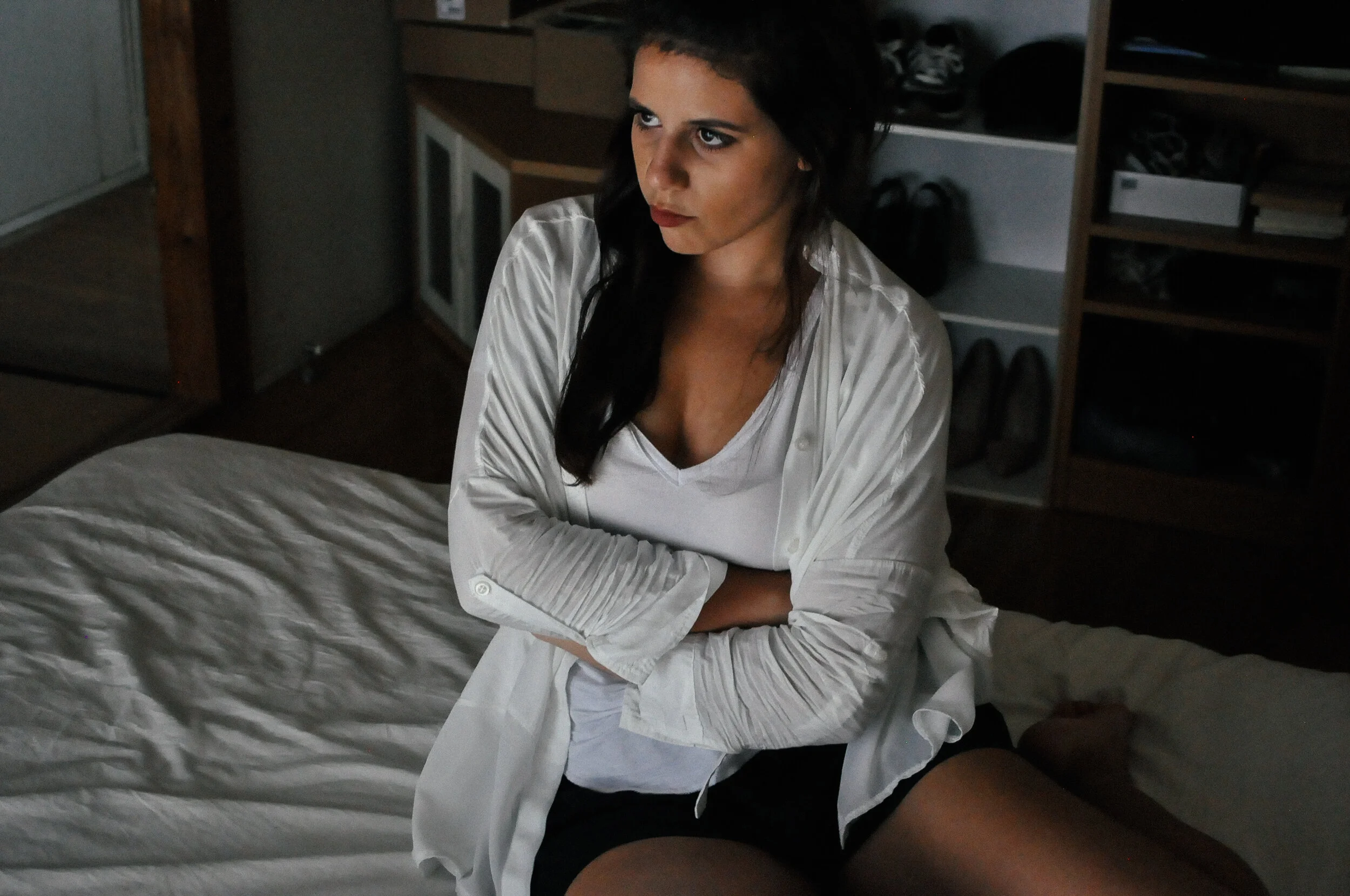
Do you ever catch yourself feeling and acting like a teenager when you go home for the holidays? You’re a full grown adult. You just tied up some loose ends at work (and are trying to forget about the unraveled ones), used your hard-earned money to pay for a flight or gas to get home, and are ready to welcome in a tryptophan-induced coma. You have a few warm moments upon arrival home, but somehow before you know it, things spiral out of control.
It may start with a bubbling irritation – Mom’s prying about your “attitude” and your brother’s sitting and relaxing while everyone else helps out with dinner. They’re so annoying, you think quietly to yourself, but with one more poke from Mom, the internal thought turns into an explosion – you’re suddenly screaming at your brother for being a spoiled brat and storming off to your room to text friends about your crazy mom. It’s like a time warp, and just like that you’re fifteen years old again.
This process of acting like your younger self around your family at this time of year is called, “holiday regression.” Regression, or a retreat to an earlier stage of development, is a defense mechanism that is provoked by emotional stress. While defenses aim to protect us against difficult emotions, they can also impede growth and keep us stuck in old, dysfunctional ways.
If we slow down the scene above, we can illuminate some moments that acted as triggers to conflict: Maybe when you were a moody teenager, Mom became sensitive to a furrowed brow or a cold response from you; now when she asks about your mood, it takes you back to your younger self who felt ambushed and intruded on by her questions, and needed to defend against them to create space. Watching your brother sit unbothered while nobody requests his help may activate the angry, jealous part of you who felt he was “the favorite child.”
Maybe Mom’s accusation of your “attitude” makes you feel trapped in the family’s image of you as “the downer” - it feels like no matter what you do and how much you grow up, they will always perceive you this way. You become even more frustrated because you’ve now validated their flawed perception, as you lashed out at her simple, “What’s wrong?” inquiry and ruined the mood. Your misunderstood inner child took the wheel, and it was a domino effect from there.
What you may miss in this rapid, seemingly automatic process is how you are contributing to the regression to old family roles. By reacting to perceived threat, as you’ve known it in your past, you are confining your family members in the same way that you feel confined by them. For example, it can be tempting to imagine we know exactly what another member’s tone of voice means about their mood. While there may be some truth to that idea (after all, you’ve heard that tone before), the assumption that we know all of each other can actually keep us, and them, stuck – we can get in the way of learning about each other and encouraging growth when we anticipate old behaviors. So what might happen if you give Mom a chance to show up differently? You can interrupt the explosive cycle (of frustration met with frustration, leading to more frustration) by choosing to respond instead of react. Responses come from a thoughtful place, while reactions are emotional and often defensive. “Oh did I look off? I’m actually enjoying being home and away from work,” you might respond to Mom. Your teenage self can take a backseat while adult you attends to your need to protect yourself in a more efficient, developed way.
Try to remind yourself that you are not that powerless teenager anymore and you now have more authority over your choices. When you step out of a reactive place in response to Mom reverting to her usual family role as “the worrier,” you give her a chance to show up differently as well - your new response sends the message that she does not need to take care of you in the same way she did when you were a child, and she is invited to engage with you as an adult.
When we recognize our contribution to conflict, we actually empower ourselves to have more control. The idea is to become mindful of our triggers and learn to emotionally regulate in overly activating settings. Learning to respond from a rational place can be liberating, as other people no longer dictate our behaviors. If we’re lucky, the old cycle is disrupted and a new, healthier kind of relationship can develop.