

A Holiday Party Survival Guide for Introverts
Tips and tricks to navigate your next gathering with skill and grace.

Well columnist Jancee Dunn knows that for some people holiday parties are a delight, but that they can be really stressful for others. As a self-described introvert, Jancee has developed strategies for holiday party survival. She has got you covered with tips and tricks to navigate your next gathering with skill and grace. You might also be rewarded with cookies.
Listen to Dunn’s advice here on The Culture Desk.

The right mentor can change your career. Here's how to find one

Amy Matsushita-Beal
How to find a mentor: 3 Steps
By Anjuli Sastry Krbechek and Andee Tagle for NPR
The right mentor can change your career. Here's how to find one
Imagine this: Someone you admire sets aside time to meet with you. They share how they accomplished their goals. And over time, they cheer you on and give you feedback and advice. Sounds pretty great, right? That is what we call a mentor.
The right mentoring relationship can be a powerful tool for professional growth — it can lead to new career opportunities, a promotion, even a better work-life balance.
One of the trickiest things about mentoring, though, is that it often happens informally. And that can make it difficult to find an entry point.
Here's how to find a good mentor, officially make the ask and make it work.
1. Finding the Right Mentor
Know your goals (both short and long-term).
Ask yourself who you look up to.
Do the research.
Be cognizant of your existing network.
Recognize the difference between a mentor and a sponsor.
2. Making the Ask to a potential mentor
Have an elevator pitch ready.
Make sure it's the right fit before asking.
Mention what you like about the person's work, especially if you've never met.
If it's a cold email, it's OK to start with the informational interview ask.
3. Tips on Being a Good Mentee
Remember your goals.
Meet consistently.
Set an agenda.
Be open to feedback: positive or constructive.
Take notes as you're meeting so that you can follow up via email.
Decide on an end date.
Remember that this relationship is not a therapy session.
Finally, consider establishing a board of mentors.
Read the full article here for details on each tip.
Why you shouldn't trust boredom
Are you actually bored, or is something else going on? Educator Kevin H. Gary shares three practical takeaways to deal with the doldrums, so you can take control of your attention, figure out which feelings to trust and name the real problem.
Are you actually bored, or is something else going on? Educator Kevin H. Gary shares three practical takeaways to deal with the doldrums, so you can take control of your attention, figure out which feelings to trust and name the real problem.
Takeaways
Boredom should not be trusted
We need to protect our attention
Talk about boredom

Five Ways To Build A Caring Culture In Your Organization
A caring culture is one in which team members are encouraged to act with generalized reciprocity: acting without an expectation of a returned favor, because the assumption is that they would make the same effort if their roles were reversed.

Five Ways To Build A Caring Culture In Your Organization
By Carsten Thiel for Forbes
In today’s rapidly changing world with increasingly saturated markets, modern society has placed a lot of merit in traits such as individualism and competitiveness. However, I have found that when you build a culture based on these values, you end up with a stunted and unhappy workforce. Teams are less likely to collaborate with other departments or even each other. Employees do not feel safe or supported enough to point out problems, even if they have good ideas about ways to solve them. Faced with a culture that only rewards individual efforts rather than collaborative ones, morale and motivation drop significantly for the majority of the team.
A Caring Culture
Instead, leaders should look to create a “caring culture.” A caring culture is one in which team members are encouraged to act with generalized reciprocity: acting without an expectation of a returned favor, because the assumption is that they would make the same effort if their roles were reversed. While it is still acknowledged and even encouraged to have individual goals and objectives, the trust and respect in a caring culture helps people feel comfortable turning to their team members for support in achieving them.
Read the full article here to learn more about creating a culture of care.

What to Know About Seasonal Depression
The fall and winter months often signal the season of celebration and holidays. But for many, the darker, colder days herald another type of period: one of fatigue, lethargy and depression.

Audrey Helen Weber
What to Know About Seasonal Depression
By Hannah Seo for The New York Times
If you notice drastic shifts in your mood during certain times of the year, you could have seasonal affective disorder. Here are answers to your top questions about the condition.
The fall and winter months often signal the season of celebration and holidays. But for many, the darker, colder days herald another type of period: one of fatigue, lethargy and depression.
Seasonal affective disorder, or SAD — a type of depression that occurs with the changing of the seasons — can affect up to 10 percent of people in the United States, depending on where they live. Here are some of the most frequently asked questions about seasonal affective disorder, with answers from experts.
Read the full article here to explore the answers to the frequently asked question.
How to stand up for yourself when confronting loved ones

How to stand up for yourself when confronting loved ones
By ISABELLA CARRENO for The Daily Californian
For most of my life, I’ve been one of the loudest people in the room. Whether that be simply because I like to talk or because I inherited this trait from my parents, I’ve never been one to be silent — that is, until it comes to sticking up for myself in front of my loved ones.
Although I have never had a problem with sticking up for myself in front of bullies or people I hardly know, doing it in front of people I love is a different story. There lies a delicate balance of respect and admiration between you and the people you love, and personally, I’ve always been afraid that sticking up for myself will tip the scales. I did not want to start a fight, nor did I want anyone to hate me. So, for most of my life, I chose the easiest and most amicable option: silence.
However, as most of us know, silence in response to things that are bothersome is never a sustainable option, and eventually the truth comes out. In order to avoid the blow up or building resentment that comes with this “easier” response, I have a few tips on how to stick up for yourself to the people you love because, in truth, your needs ultimately matter just as much as those of the people you love.
If you feel too emotionally charged to start a productive conversation, make a note for later
Consider the situation if the roles were reversed
Be honest with yourself and view your needs with importance
Read the full article here for more information on each tip.

Excuse Me While I Do My Holiday Preset

Luca D’Urbino
Excuse Me While I Do My Holiday Preset
By Alyson Krueger for the New York Times
Right after Halloween, Ashley Guerra started being inundated with invitations — for Friendsgiving, for holiday parties and for New Year’s Eve.
“The holidays always feel a little chaotic,” said Ms. Guerra, 33, who lives in Dallas and works in product marketing for a tech company. “It’s more eating, more drinking, more late nights, more energy in showing up for other people.”
So this year she’s preparing by taking some time for herself ahead of Thanksgiving. “I’m filling up on my own cup,” she said.
In other words, Ms. Guerra is trying to give her body a break.
The holidays can be taxing, both mentally and physically. According to a poll from the American Psychiatric Association, 31 percent of Americans went into the 2022 holiday season expecting to feel more stressed than they did the previous year, up nine percentage points from 2021. The indulgent and constant eating and drinking, the financial strain of buying gifts and traveling, and the reunions with family members and old friends can all take a toll.
But some forward-thinking Americans are taking steps now to get their bodies and minds in fighting shape for what’s next —
Read the full article here to learn how some are minimizing holiday stress.
You Can't Do Everything for Everyone
Giving money and time to volunteer organizations is noble, needed, and fulfilling. But we don't have to give up our lives to give to others.

Carissa Potter Carlson
You Can't Do Everything for Everyone for HuffPost
By Melissa Heisler
Many of the individuals I coach are humanitarians. They live to give. They give to their family, their children, their jobs, and usually they also have a deep desire to give to humanity and the world overall. Sometimes they give too much, putting a social agenda above their own needs, resulting in burnout. Sometimes they feel unfulfilled or a failure if they are not doing "big enough" work, if they are not helping to make large societal changes, if they are not changing the lives of millions. When I saw this TED talk, I found hope for all of my givers. We all do not have the means of Bill and Melinda Gates to do large scale programs. We all do not have the celebrity of Geena Davis to use for gender equality awareness. We all do not have the world platform of Pope Francis to call for the end of poverty. But each of us, each and every day, are able to effect the world around us.
Giving money and time to volunteer organizations is noble, needed, and fulfilling. But we don't have to give up our lives to give to others. Every day is a chance to give to others by just being ourselves. We can smile in a grocery line. We can help our elderly neighbor bring in the groceries. We can take a friend to the doctor. We can talk to a graduate about landing their first job. None of these activities would take a lot of time or necessarily take us out of our routine. We don't need to start a non-profit in order to contribute. Just being aware during the day will show opportunities for helping those around us. And our little effort can have a big impact in the long run.
"If you wait until you can do everything for everybody, instead of something for somebody, you'll end up not doing nothing for nobody." -- Malcom Bane
What can you do today in your daily routine to give a little to those around you?
Read the full article here.
Four-Legged Reason to Keep It Together
A tale of how a dog named Danger brought a fresh perspective during life's challenging moments.

Four-Legged Reason to Keep It Together
By Timothy Braun for The New York Times
A tale of how a dog named Danger brought a fresh perspective during life's challenging moments.
When I met the dog, he was sitting in a cage to my left as I entered a local animal shelter near the running path I frequent in downtown Austin, Texas. I had no intention to adopt a dog. I only stopped for a drink of cold water.
I don’t run to stay healthy, I run to stay thin, and lately to blow off steam. I was engaged to be married, and the relationship with my fiancée was getting frosty, with a lot of yelling and blame being tossed around.
The volunteers at the shelter were shrewd. It was overcrowded, with a high kill ratio, the highest in its history, I was told. As patrons walked into the caged areas, the dog on their immediate left was next on the chopping block, if no one adopted it. The dog after that was next, and so on.
Read the full article here.
Artwork by Brian Rea
Opinion: Have fun with strangers. Democracy and our mental health may depend on it

David Tuman
Opinion: Have fun with strangers. Democracy and our mental health may depend on it
By Jean Guerrero for Los Angeles Times
Over the past couple of years, I lost my fear of the Other.
It happened while I was picking up new hobbies, such as skating and dancing, while befriending a larger and more diverse array of people. In some cases, I bonded with people whose politics are very different from mine.
The disconnection I’d felt during the Trump administration and the height of the pandemic has largely waned, replaced by more hope and faith in my community and a stronger sense of well-being.
Could we all benefit from expanding our social circles?
Read the full article here.
A single grey hair springs to life in a playful exploration of ageing anxiety
A ritualistic evening of self-care spirals into claustrophobic self-scrutiny when a woman discovers a grey hair.

In the animated short Silvering, a candle burns and a radio hums as a woman shaves her legs in the bath. The scene is set for a night of self-care. Stepping out of the water, she opens a window, passing her clothes that lie on the chequered floor when, in an instant, the peace is shattered by a single grey hair. Examining her figure from shin to breast to bottom for signs of ageing, she descends into a spiral of self-scrutiny. Soon, the proceedings take a turn for the surreal as the hair dances to life, slithering around to bind her hands and envelop her body.
In her rendering of ageing anxiety, the Scottish filmmaker Eilidh Nicoll summons the distinct intimacy of being alone in the bathroom with one’s own body via a simple, stylish colour palette and nary a word of dialogue. Instead, she draws out her character’s subtle expressions to weave the narrative, as the richly detailed music and sound design evoke the dissonance that can accompany the experience of confronting your own reflection. The result is a heartfelt and gently humorous work that magnifies the sometimes uncomfortable reality of existing in an ever-changing body.
Description from Directors Notes
Inga
"Through her memoirs, Inga reflects about love, old age and death. We are invited into her home, as she doing her morning rituals and baths in the cold lake. The short portrait shows in artistic and intimate pictures, a day in a life, how it's like being old and what it means for Inga."
Credits
Director & Cinematographer: Uffe Mulvad
Productions company: Uffe Mulvad
You are such an interesting conversation.

How To Belong Be Alone
Written and read by Pádraig Ó Tuama
It all begins with knowing
nothing lasts forever,
so you might as well start packing now.
In the meantime,
practice being alive.
There will be a party
where you’ll feel like
nobody’s paying you attention.
And there will be a party
where attention’s all you’ll get.
What you need to do
is to remember
to talk to yourself
between these parties.
And,
again,
there will be a day,
— a decade —
where you won’t
fit in with your body
even though you’re in
the only body you’re in.
You need to control
your habit of forgetting
to breathe.
Remember when you were younger
and you practiced kissing on your arm?
You were on to something then.
Sometimes harm knows its own healing
Comfort knows its own intelligence.
Kindness too.
It needs no reason.
There is a you
telling you another story of you.
Listen to her.
Where do you feel
anxiety in your body?
The chest? The fist? The dream before waking?
The head that feels like it’s at the top of the swing
or the clutch of gut like falling
& falling & falling and falling
It knows something: you’re dying.
Try to stay alive.
For now, touch yourself.
I’m serious.
Touch your
self.
Take your hand
and place your hand
some place
upon your body.
And listen
to the community of madness
that
you are.
You are
such an
interesting conversation.
You belong
here.
Stop Looking for the Perfect Partner

Brian Rea
Stop Looking for the Perfect Person
Is the pursuit of a partner who meets all your criteria worthwhile or unrealistic? Two women on choosing imperfect love.
“The only three men I had ever imagined a future with all told me that something was missing,” Oz Johnson wrote in her Modern Love essay. When Oz was 23, her boyfriend said she met 99 percent of his criteria, but she was missing 1 percent. Over a decade later, another man broke up with her via email. Their love was almost perfect, he said, but not enough to last.
What is this missing, unquantifiable feeling? Oz used to be haunted by these rejections, but now she has come to embrace the search for imperfect love.
After: Nancy Cardwell wasn’t looking for love — but then, at 58 years old, she fell passionately in love with tango. Her newfound zeal for the dance took her to Buenos Aires, where she fell in love again — this time, with a man named Luis.
“I believe that when you are with a wonderful person, but something is missing, you take your partner’s hand and search for it together.”
What Does It Really Mean to Dissociate?

Jun Cen
What Does It Really Mean to Dissociate?
By Christina Caron for The New York Times
Have you ever zoned out?
Maybe you have experienced highway hypnosis, with no recollection of having driven from Point A to Point B. Or maybe you have zero memory of something you just read.
These are mild forms of dissociation, which is the ability to disconnect from our thoughts, feelings, environment or actions.
Dissociation can even help athletes do their jobs, for instance, because it “allows people to focus on the most salient or life-preserving aspects of a situation” without mental interference, said Janina Fisher, a psychologist who has been treating dissociative disorders for decades.
But sometimes people experience a major form of dissociation, often in the aftermath of overwhelming trauma. In this case, the dissociative symptoms become more extreme and frequent.
What are the dissociative disorders?
Rather than fight or flee in a stressful or threatening situation, some people “freeze,” said Dr. Frank W. Putnam, a professor of clinical psychiatry at the University of North Carolina School of Medicine and an expert on dissociative disorders. “That’s the dissociative state where you shut down and you kind of go away.”
Although dissociation can help a person mentally escape during a threat, it can interfere with daily life when people continue to dissociate during benign situations. Some people might find themselves in a new location without knowing how they got there, for example.
Frequent experiences like that make dissociation pathological, Dr. Putnam said. It becomes a disorder when you space out and “lose time” long enough that it interferes with your life in a significant way, he added.
The three most common and well-known dissociative disorders are: dissociative identity disorder, depersonalization/derealization disorder and dissociative amnesia.
The common thread in each is a disruption of identity.
Read the full article here.
Want to Believe in Yourself? ‘Mattering’ Is Key.
Mattering involves “more than feeling like you belong in a group

Simon Bailly/Sepia
Want to Believe in Yourself? ‘Mattering’ Is Key.
By Gail Cornwall
This overlooked concept has been linked to better relationships — with oneself and others.
What mattering means
Mattering is “a core, universal human need,” a necessary component for well-being, Dr. Flett said. But it’s tricky to define, he added, because people sometimes confuse it with belonging, self-esteem and social connection.
Mattering involves “more than feeling like you belong in a group,” he explained; it’s also being “missed by people in that group if you weren’t there.” When it comes to self-esteem, you can like yourself and feel capable, Dr. Flett said, but “you still won’t be a happy person if no one notices you when you enter a room.”
To matter, people must feel valued — heard, appreciated and cared for — and they must feel like they add value in ways that make them feel capable, important and trusted, said Isaac Prilleltensky, a professor at the University of Miami and a co-author of “How People Matter.” It’s a two-part definition: feeling valued and adding value.
Research suggests that people who feel like they matter experience more self-compassion, relationship satisfaction, and greater belief in their capacity to achieve their goals, while lack of mattering is associated with burnout, self-criticism, anxiety, depression, aggression and increased risk of suicide.
How do you know where you fall on the scale? Start, Dr. Prilleltensky said, by asking yourself a few questions: Do you feel valued in your relationships? At work (both paid and unpaid)? In your community? Do you matter to yourself, possessing a sense that you’re worthy regardless of what you accomplish or how you look?
Then ask whether you add value in each of those four areas. Do you feel like a good partner or friend? Do you feel competent at work? Do those outside your immediate circle rely on you for anything? Is self-care a reality or a pipe dream?
The key, Dr. Prilleltensky said, is to aim for a sense of balance across both parts of the definition and all areas of your life.
Read the full article here.
How to Get Over Someone, According to Psychologists and Relationship Experts
While there’s no surefire way to avoid a broken heart (unless you’re an unfeeling robot, of course), there is a way through it—even if, at the moment, you truly believe you’ll never be happy again.

Channing Smith
How to Get Over Someone, According to Psychologists and Relationship Experts
By Jenny McCoy for Glamour
Wondering how to get over someone is a universal experience—so then why does it feel so isolating? On a scale of 1 to torturous, getting your heart broken is a solid “absolutely awful.” Most of us have been there at some point, left questioning how to move on or how to best end a relationship. While there’s no surefire way to avoid a broken heart (unless you’re an unfeeling robot, of course), there is a way through it—even if, at the moment, you truly believe you’ll never be happy again.
Understanding how your mind works—and how to work it better—can be helpful after breaking up. “It’s important to understand that we humans come hardwired with the ability to experience pleasure from our intimate connections and pain form heartbreak,” says Nan Wise, PhD, a sex therapist, neuroscientist, relationship expert, and the author of Why Good Sex Matters: Understanding the Neuroscience of Pleasure for a Smarter, Happier, and More Purpose-Filled Life. “The oldest part of our brain, which we share with all mammals and many other animals, has a circuit of brain regions—the panic/grief/sadness system—that gets activated when we experience the loss of an important relationship.”
According to Dr. Wise, this means your body can very much feel the physical and emotional aftereffects of a breakup because our brains instinctually view relationships, and the resources they provide, as essential for survival. “When activated, this panic/grief/sadness system creates painful withdrawal-like symptoms: an ache in the heart, overwhelming sadness and despair, ruminations, regrets, and diminished enthusiasm for life,” explains Dr. Wise. “It is important to remember that heartbreak and subsequent grief are not pathological, but a normal part of being an emotional creature. It is just the dark side to our life-affirming ability to form loving, intimate connections.”
Read the full article here.
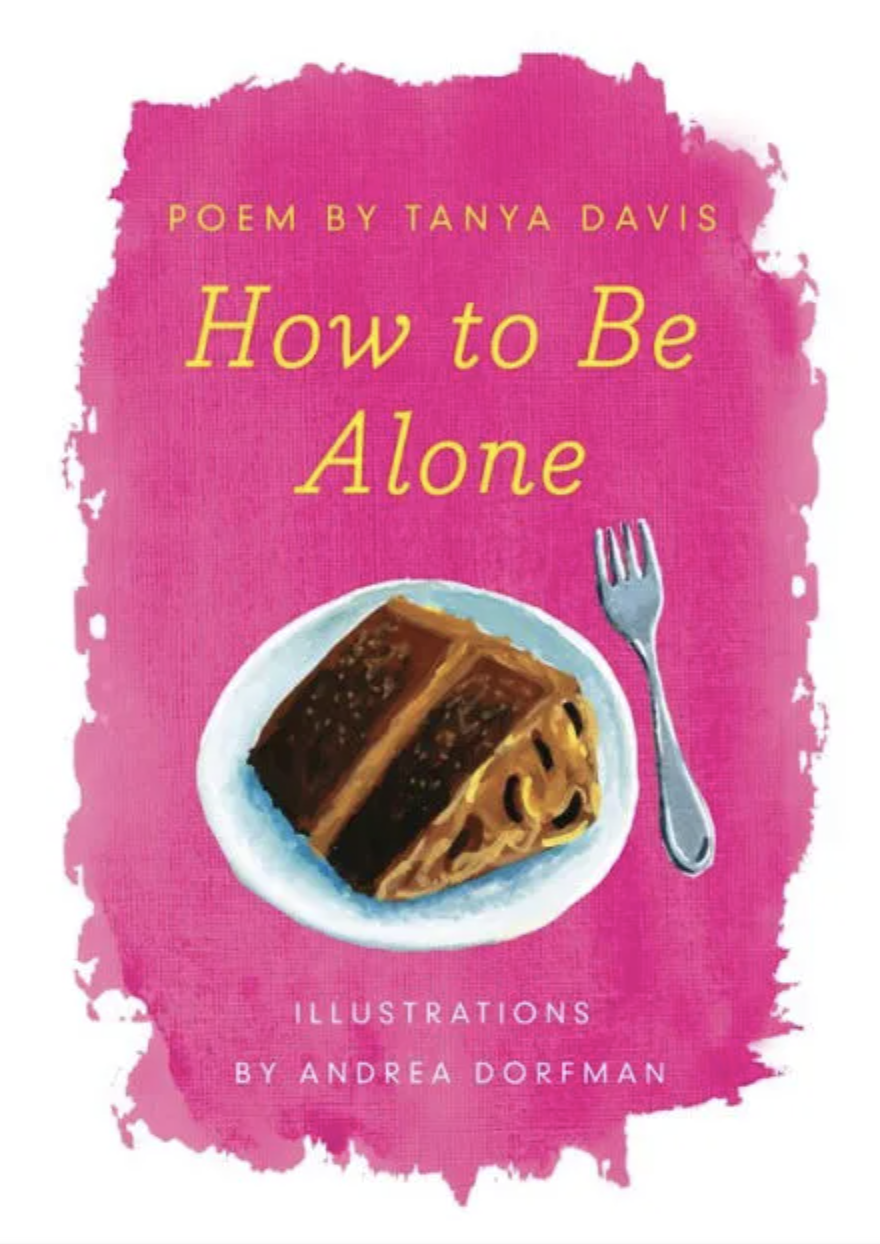
How To Be Alone
How to Be Alone, reveals the possibilities and joys waiting to be discovered when we engage in activities on our own.
How To Be Alone by Tanya Davis
Music can serve as therapy. Here’s how it can help reduce anxiety.
Sometimes, when we are gripped by panic and anxiety, we may not have the words to describe how we are feeling. Then, a song comes on the radio or our playlist, and it hits us: “That is exactly how I’m feeling!”

Music can serve as therapy. Here’s how it can help reduce anxiety.
By Raymond Leone for The Washington Post
Music can have a profound effect on us. It can improve our physical and mental health by helping to reduce blood pressure, alleviate stress and lead to a release of dopamine, a neurotransmitter that affects our mood and sense of happiness, research shows.
Sometimes, when we are gripped by panic and anxiety, we may not have the words to describe how we are feeling. Then, a song comes on the radio or our playlist, and it hits us: “That is exactly how I’m feeling!”
Music — whether the dark, minor essence of Beethoven or the down-tempo sparseness of Lucinda Williams — can speak for us, especially when we are feeling anxious or depressed.
How you can use music when you are anxious
When you are feeling anxious, instead of finding some “relaxing” music, put together a personal playlist and let the music or the song sequence guide you.
Start with a song or piece of music that matches your current mood. The initial song or songs can have a little more intensity, some tension and dissonance or melancholy. Then each ensuing song can gradually, one step at a time, help bring you along toward a more relaxed place.
Use music that you like. Maybe it’s Norah Jones or 80s pop or classic jazz or Mozart.
This Spotify playlist may help move you from an anxious to a relaxed state of mind
Here is a sample playlist with some instrumental guitar music, starting with a bit more intensity and then moving toward comfort and relaxation:
“Prelude” — Alex de Grassi
“Fusion of the Five Elements” — Michael Hedges
“Megalopolis” — Rodrigo y Gabriela
“The 2nd Law” — Michael Hedges
“Sleeping Lady” — Alex de Grassi
“The Sprinter” — Isato Nakagawa
“Prelude in D Minor” — Acoustic Alchemy
“Saint Agnes and the Burning Train” — Sting
“A Child’s Song” — Will Ackerman
“In This Moment” — Ken Verheecke
“The Rain Is Pouring” — Alex de Grassi
“For the Asking” — Will Ackerman
“The Water Garden” — Alex de Grassi
“The Bricklayer’s Beautiful Daughter” — Will Ackerman
“Golden Slumbers” — Erik Söderlind
Music can meet us where we are — perhaps anxious, depressed or low — and help take us to where we want to be — calm and relaxed. Pick what moves you and make music work for you.
Read the full article here to explore how music can serve as therpay.
8 Solo Date Ideas That Can Help You Actually Enjoy Doing Things Alone
Going to a cozy bar or weekday movie by yourself doesn’t have to be awkward.

Antonio Rodriguez
8 Solo Date Ideas That Can Help You Actually Enjoy Doing Things Alone
By Jenna Ryu for Self
Going to a cozy bar or weekday movie by yourself doesn’t have to be awkward.
Hanging with friends or family, enjoying a romatic evening, and bonding with coworkers after hours are all fine ways to fill your leisure time. But maybe your loved ones are busy or live far away. Or perhaps you’re extremely single or, frankly, just not in the mood to talk to anyone and craving some me time.
No matter why you’re looking to have fun by yourself, the options for solo date ideas may seem pretty limited. Aside from rotting in bed or reserving a table at your favorite restaurant (which might sound awkward), what else can you really do?
First, you might need a perspective shift. Many of us are turned off by the idea of venturing out on our own and fear that we’ll look (and feel) like, well, unlovable losers. But that couldn’t be further from the truth.
Here are some suggestions for your solo date.
1. Go on a nature walk or scenic hike.
2. If seeing a movie in a packed theater intimidates you, try a matinee.
3. Chill out (or knock some items off your to-do list) at a cute coffee shop.
4. Try a new workout class.
5. Treat yourself to a spa or self-care day.
6. Make yourself a mind-blowing meal (or dessert).
7. Savor a delicious cocktail at a local bar.
8. Shop (or window browse) to your heart’s content.
Read the full article here for details on your solo date.