

What does evidence-based treatment really mean? Lance Dodes MD makes the case for psychodynamic therapy:
U.S. Psychoanalysts Apologize for Labeling Homosexuality an Illness
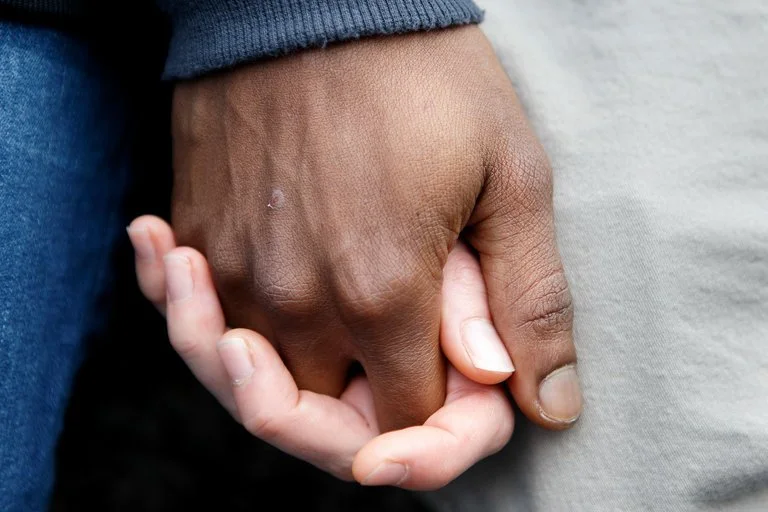
In honor of Pride month, The American Psychoanalytic Assoc. has issued an apology for their past views on homosexuality. This apology is long overdue, but it is very meaningful. Many patients sought treatment for decades only to be demeaned and in some cases damaged by their therapists prejudices. Let's hope this apology marks a new era in mental health possibilities for the LGBTQ+ community.
See Dr. Shubert's quote in the article below:
https://www.reuters.com/article/us-usa-lgbt-stonewall-psychoanalysts-idUSKCN1TM169
My Friend Came Out As Gender Non-Binary! →
In this Psychology Today blog post, Dr. Shubert sorts through the confused, anxious reactions that he noticed after a friend came out as gender non-binary.

What we’re running from when we count our steps

Dr. Susie Orbach examines our relationship to apps and wearable gadgets for self-improvement. She asks the question: What might we be running from when we count our steps? “In a culture bent on targets, we create the illusion of an objective test telling us whether we are living life well enough. It is a bit like being in an exam the whole time.”
https://www.prospectmagazine.co.uk/magazine/what-were-running-from-when-we-count-our-steps
Don’t Turn Individuals with ADHD into Neurotypicals

The implications of this new understanding are vast. The first thing to do is for coaches, doctors, and professionals to stop trying to turn people with ADHD into neurotypical people. The goal should be to intervene as early as possible, before the individual has been frustrated and demoralized by struggling in a neurotypical world, where the deck is stacked against him.”
Dodson lays out a two pronged therapeutic approach that has a chance of working, when nothing else has...
The Psychopharmacology of Everyday Life

”We do have a choice about whether to medicate and how we do so. I think we have forgotten this because of how easy it is to obtain pills, along with the pervasive idea that our problems are simply chemical or genetic. So I want to begin by recalling what the drug panacea is treating at the most basic psychological level: pain, attention, sadness, libido, anxiety, sleep. Freud was surprisingly insightful about these crucial aspects of the psyche, even from his earliest writings before the turn of the century.”
https://www.nybooks.com/daily/2018/11/19/the-psychopharmacology-of-everyday-life/
How To Deal With Making More Money Than Your Parents →
Dr. Shubert was quoted in this recent girlboss story about how to deal with making more money than your parents, by Theresa Avila:
https://www.girlboss.com/money/how-to-deal-with-making-more-money-than-parents
Why Sex Is Not Binary →
Some biology to back up the matter:

https://www.nytimes.com/2018/10/25/opinion/sex-biology-binary.html
They Gave Up Their Cell Phones For Their Mental Health →
We are very proud of Negar Sarshar, LMFT, for helping out Buzzfeed’s burnt-out LadyLike crew on their quest for rejuvenation!
You can watch the video here:

https://www.youtube.com/watch?v=Pp9l3hvOuEQ
Using Psychoanalysis to Understand #MeToo Memories →
An interesting article about how current changes in social norms affect how we look back at traumatic situations:
“The cultural shift in what is deemed acceptable, and the recent increase in women holding their abusers accountable, does more than just help individuals realize that they were violated back then…something that is inscribed as a memorable but not necessarily traumatic event can become traumatic through the prism of time and later experience.”

https://www.nybooks.com/daily/2018/10/11/psychoanalysis-and-metoo-memories/
The Origins of Generosity

This article from the New York Times uses observation of primates to explore the origins of our generosity.
"The researchers designed an experiment that could provide strong evidence that bonobos could give things to each other simply out of generosity — rather than being pressured into doing so, or expecting some sort of immediate payback” … “Would they do it if there was no benefit to them?” asked Brian Hare, a primatologist at Duke University who helped run the study.
A Somatic Perspective on the Trauma of Growing Up Gay

Payam Ghassemlou MFT, Ph.D. explains how bodies, in particular the bodies of gay kids, can be affected by oppression. It's a useful read for anyone interested in stress, trauma, or the somatic/psychological effects of prejudice.
"In other words, under a daily homophobic assault, a child’s sympathetic system (“stress response” or “fight or flight” response) gets overly activated. Often during such stressful situations, neither fighting nor fleeing can resolve the overwhelming situation, and the thwarted or incomplete fight and flight responses can become “trapped” within the body and dysregulate the nervous system. Such a dysregulated nervous system is more likely to get stuck on “high” or hyper-arousal. Anxiety, panic attacks, rage, hyperactivity, mania, hypervigilance, sleeplessness, exaggerated startle response, digestive problems, and many other symptoms are the result of a dysregulated nervous system that is stuck on “high” or hyper-arousal."
http://drpayam1.blogspot.com/2018/08/a-somatic-perspective-on-trauma-of_18.html
Rethinking Adultery
Attached is a review of Esther Perel's newest book, The State of Affairs: Rethinking Adultery, in which she talks about the surprising concept that affairs, if processed honestly, can actually save a relationship.
In this review Zoe Heller also brings up larger points about how much we can expect from our partners overall. A quote from the article:
"This—the impossibility of absolute romantic security—is the bracing moral at the center of Perel’s book. There is no “affair proof” marriage, she warns, whatever the self-help industry tries to tell you. To love is to be vulnerable. Relationships can inspire varying degrees of trust, but trust is always, as the psychoanalyst Adam Phillips puts it, “a risk masquerading as a promise.” To believe yourself to be the sole progenitor of your partner’s desire, rather than merely its current recipient, is a folly. Elizabeth Hardwick, who stoically endured the countless infidelities of her husband, Robert Lowell, knew something about this. In her famous essay “Seduction and Betrayal,” she described the terrible wisdom vouchsafed to the betrayed heroine of classic literature: she 'is never under the illusion that love or sex confers rights upon human beings. She may of course begin with the hope, and romance would scarcely be possible otherwise; however, the truth hits her sharply, like vision or revelation when the time comes. Affections are not things and persons never can become possessions, matters of ownership. The desolate soul knows this immediately and only the trivial pretend that it can be otherwise.'"

Burnout, and how to avoid it. →
Dr. Kate Tepper's thoughts about the causes of burnout and how to avoid it are featured in Girlboss' 8 Ways to Avoid Falling in to a Black Hole of Burnout:
"Just as the airlines recommend putting on your oxygen mask before tending to the person next to you," says Dr. Tepper, "it’s critical to look after your own personal well-being first and foremost."
The first step of addressing potential or impending burnout is to take stock of your work situation and your mental health. If you find yourself experiencing an "underlying anxiety about the unknown" or stress about "the internal demands for success, happiness, perfection or ideals," you might be headed toward a "reactive state of mind: fight, flight, freeze, or faint," according to Dr. Tepper.

https://www.girlboss.com/girlboss/2018/1/16/how-to-avoid-burnout
Stop Diagnosing Your Co-Workers: Why Words Matter..
Our own Dr. Lauren Harb was interviewed for a Girlboss article about what it means when laypeople use real jargon to diagnose their co-workers. Here's what she had to say:

https://www.girlboss.com/girlboss/2018/1/8/stop-calling-coworkers-psychopaths
8 Ways to Have a Better Relationship in 2018 →
While we don't believe that an "8 best ways" list can truly change a troubled relationship, it couldn't hurt either:
https://www.nytimes.com/2017/12/03/smarter-living/8-ways-to-have-a-better-relationship-in-2018.html?action=click&module=Smarter%20Living&pgtype=Homepage
Against Empathy →
"In this video, Paul Bloom, psychologist and Yale professor, argues that empathy is a bad thing—that it makes the world worse. While we've been taught that putting yourself in another's shoes cultivates compassion, it actually blinds you to the long-term consequences of your actions. In this animated interview from The Atlantic, we hear Bloom’s case for why the world needs to ditch empathy."
He says in the video, "If you really want to make the world a better place, spend less time thinking about how to maximize your own sense of empathic joy, and spend more time, in a cold blooded way, about how to help other people."
David Sedaris on Keeping a Diary in the Age of Over-Sharing
Therapy works through equal parts catharsis and getting to know yourself (among some other things), which is why we often encourage our patients to write - write letters you don't send, poems, or keep a diary. Here's a fun little video where David Sedaris tells his story about writing for himself.
The Problem with Anger →
Unresolved anger can build up and be damaging in relationships. This article discusses the issues surrounding anger, precipitants of anger, and leaves readers with a message of how to handle anger in a healthy way.

https://www.psychologytoday.com/blog/moments-matter/201711/the-problem-anger
Why Does Therapy Work? →
A nice take on what we do in therapy:
"Various types of long-term, in-depth psychotherapy have a few things in common. They depend on a safe and trusting relationship with a therapist. They follow lived time, meaning life happens during treatment, enabling a client to work and understand in parallel with actual events and changes. They also allow the client to make manifest internalized material, to dredge up and acknowledge thoughts and feelings they may have otherwise just left alone (Drisko, 2004)."

https://www.psychologytoday.com/blog/encountering-america/201709/why-does-therapy-work#_=_